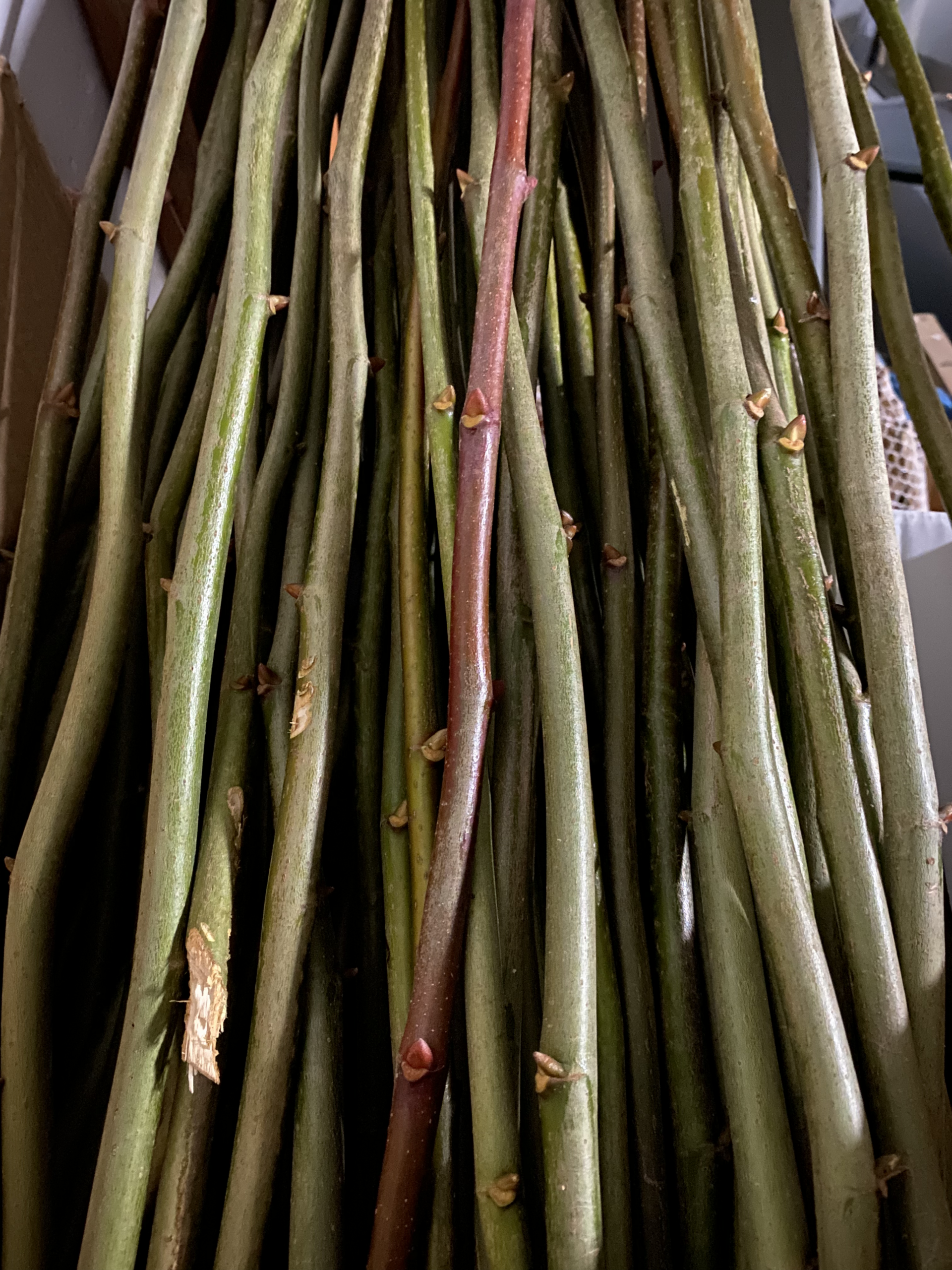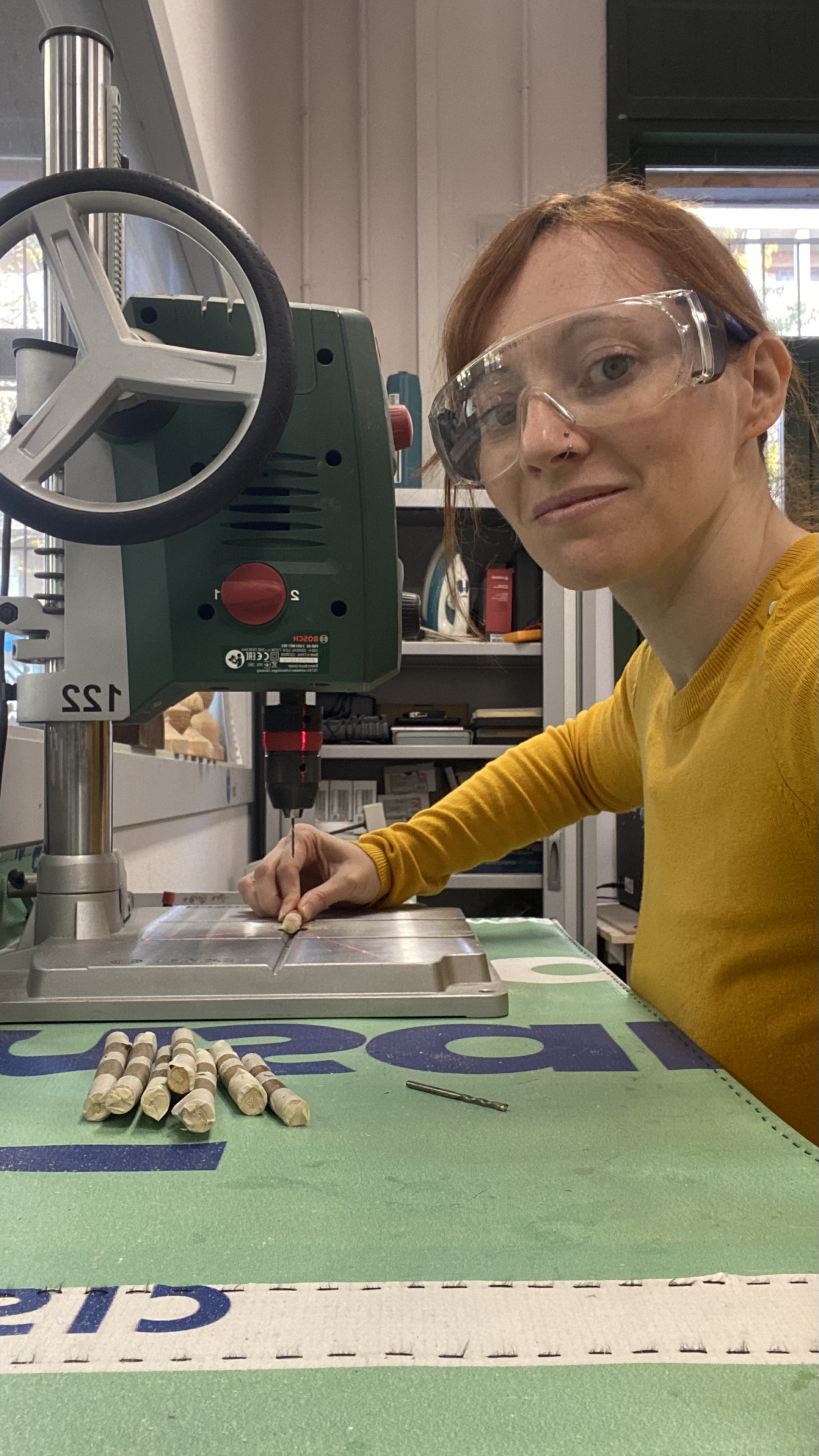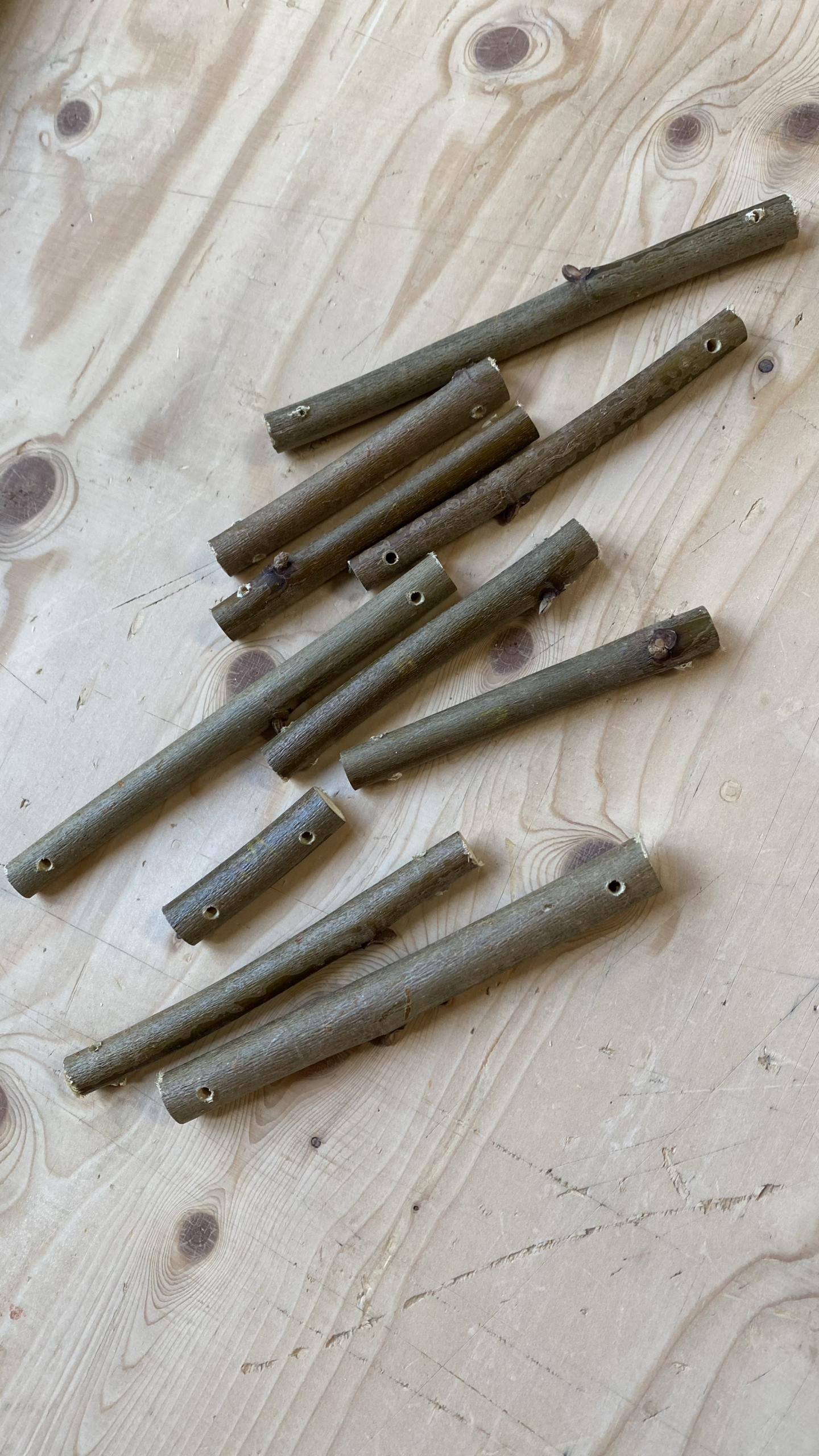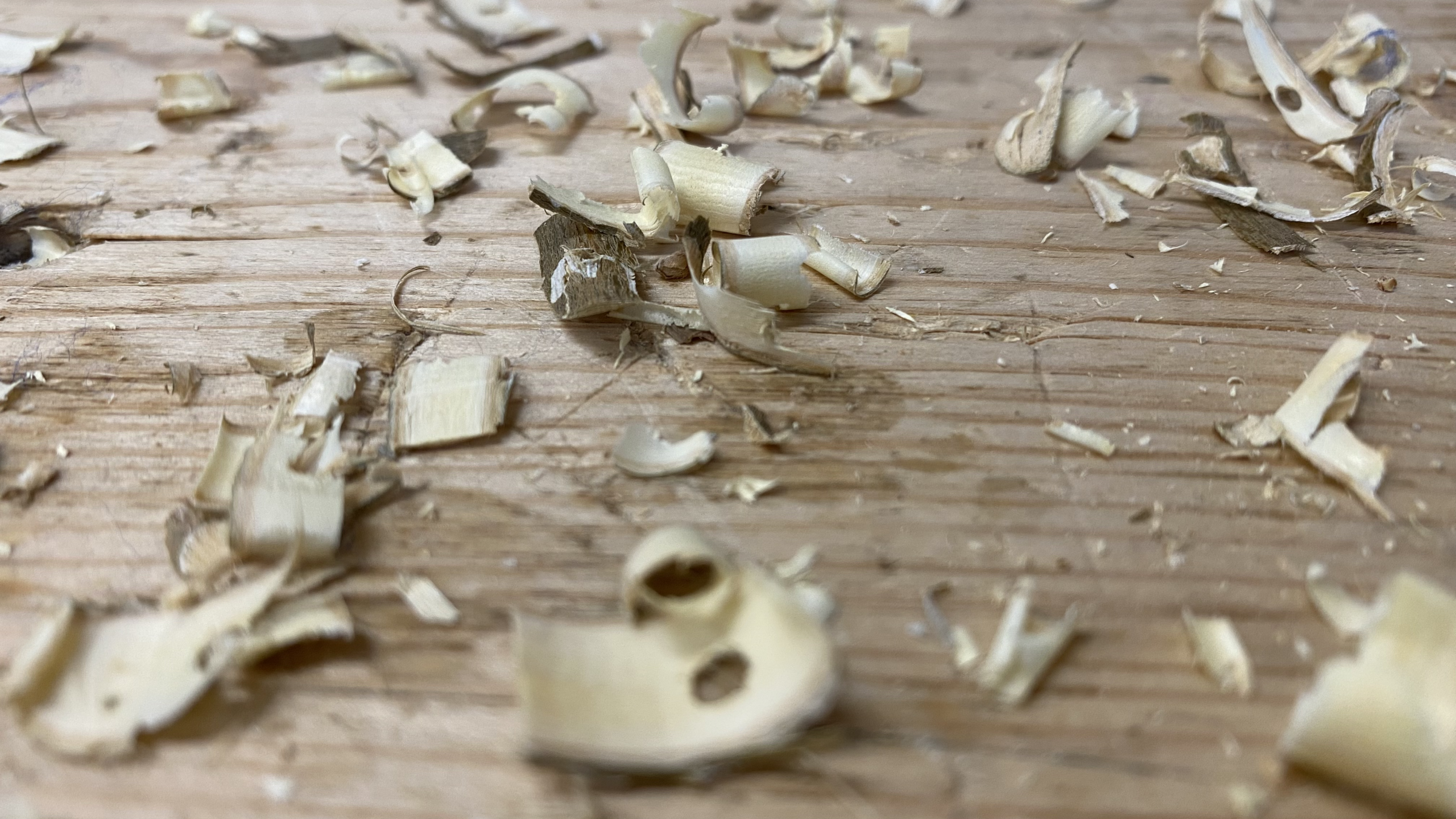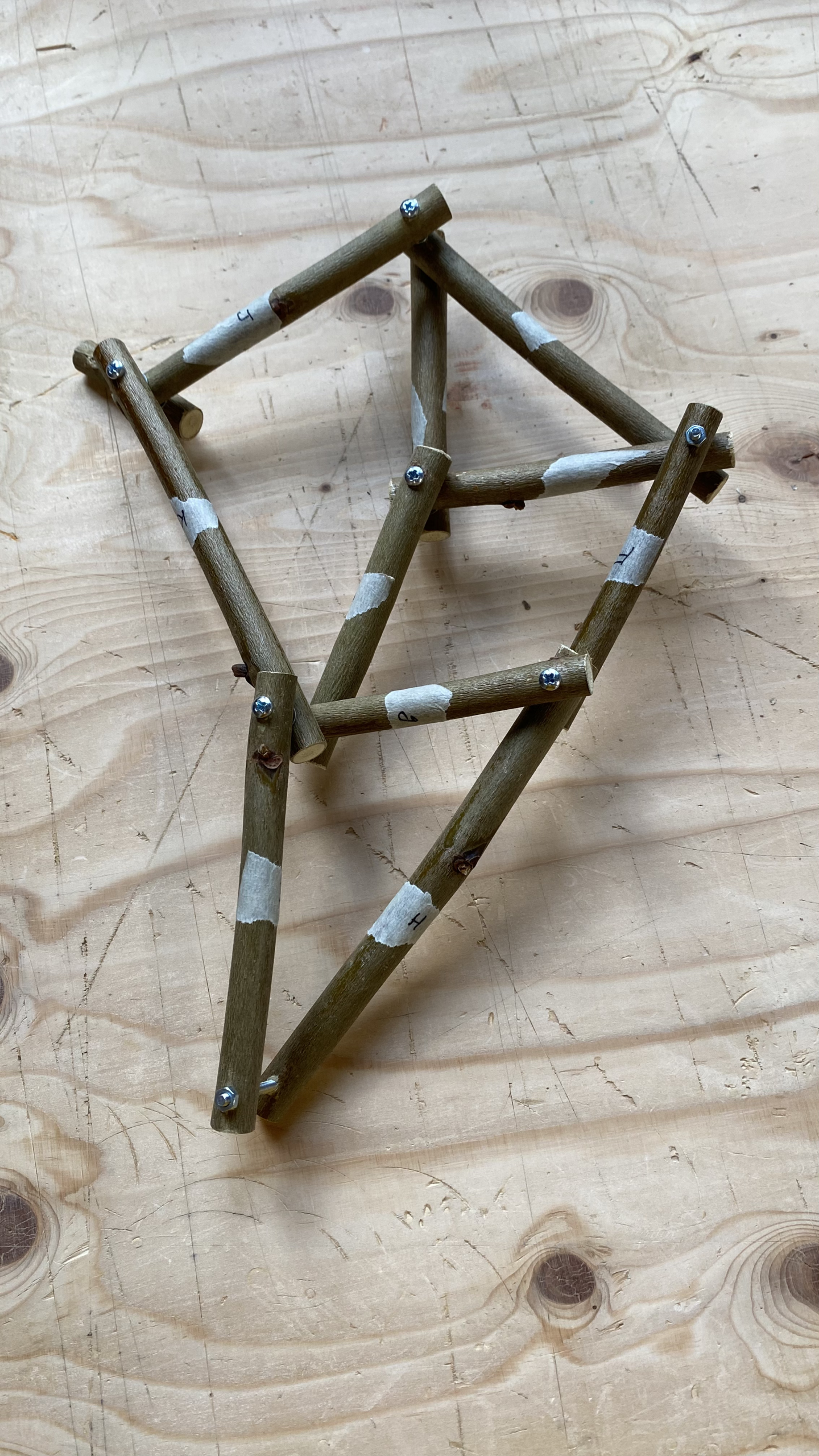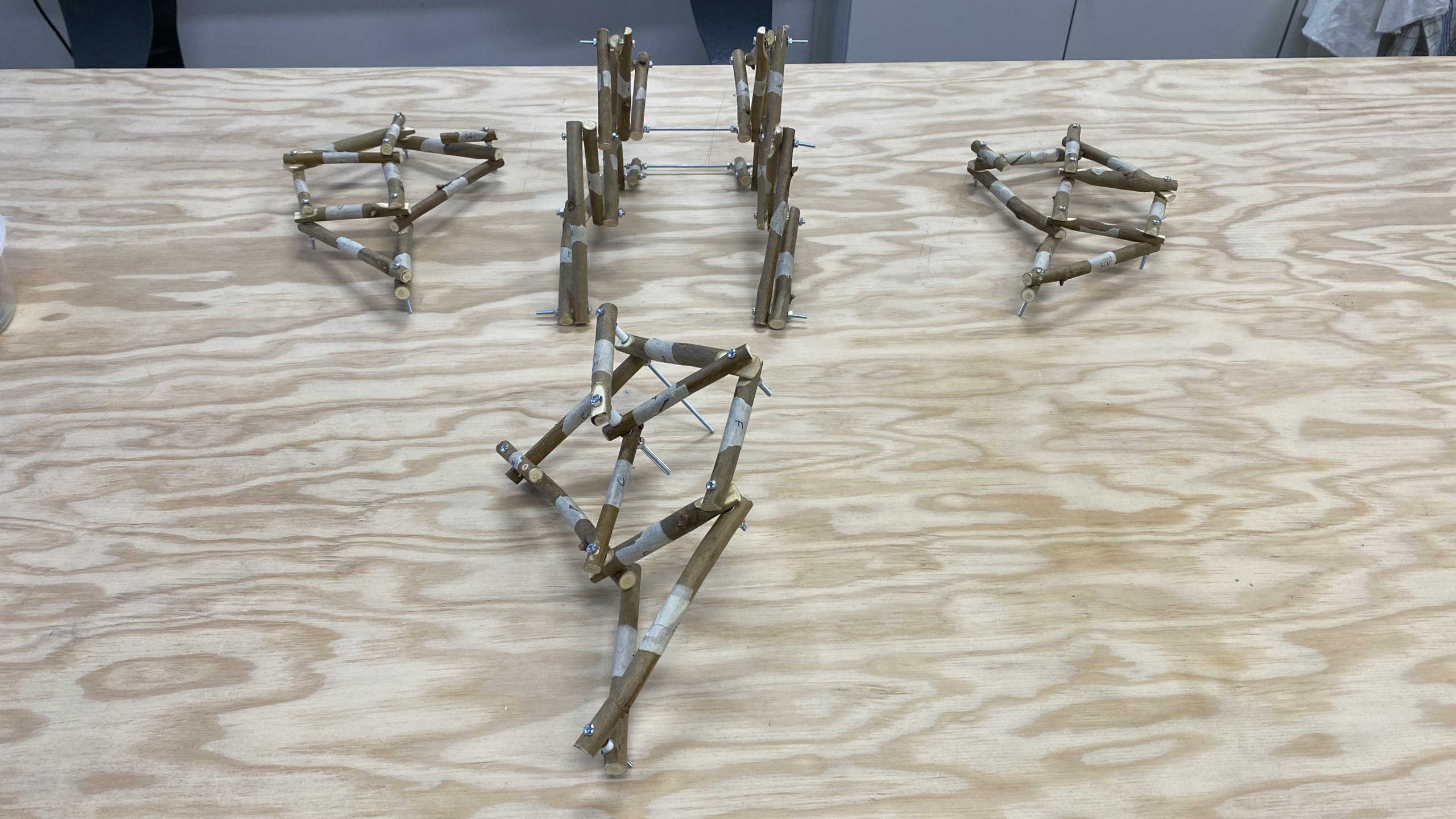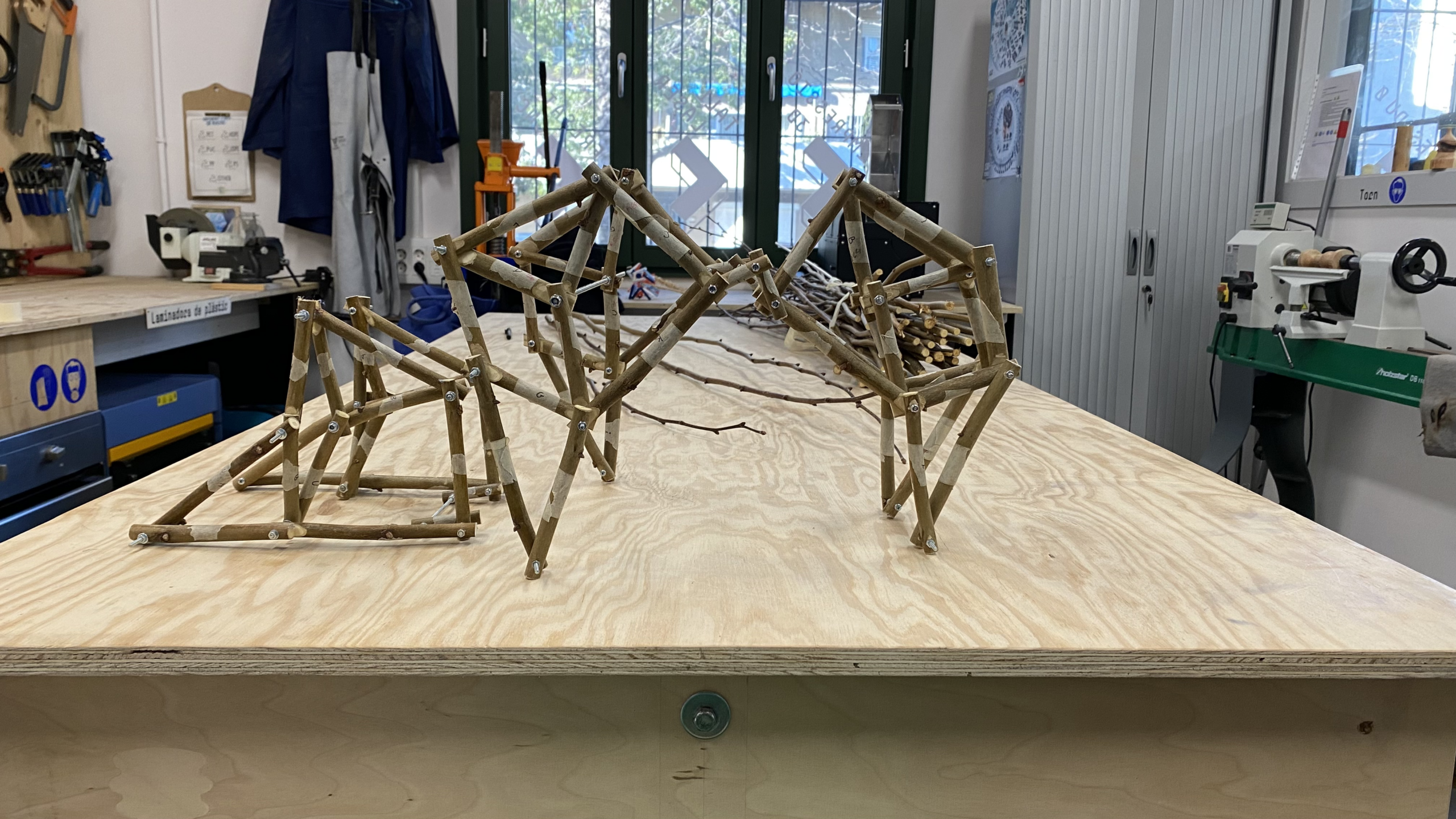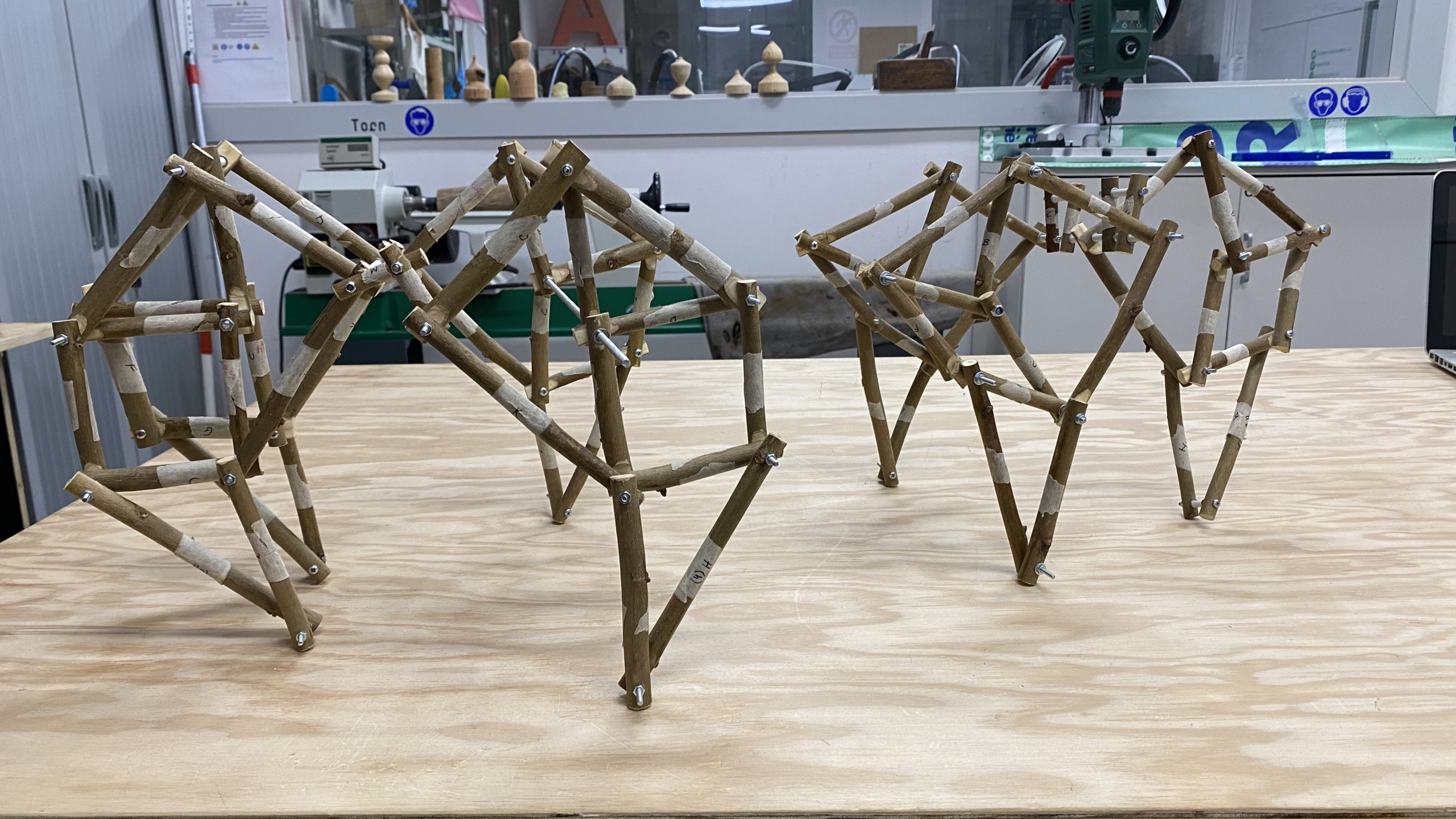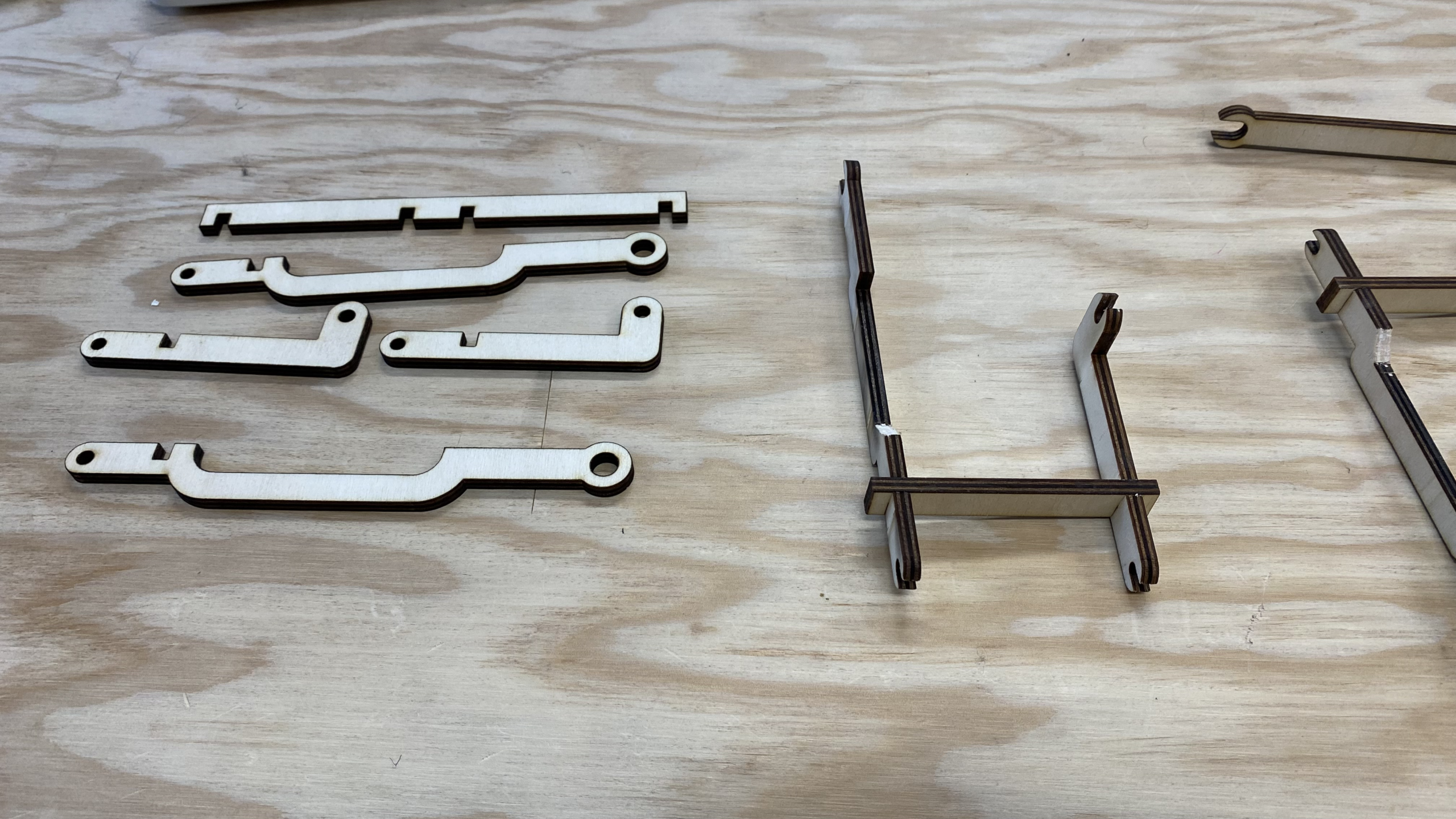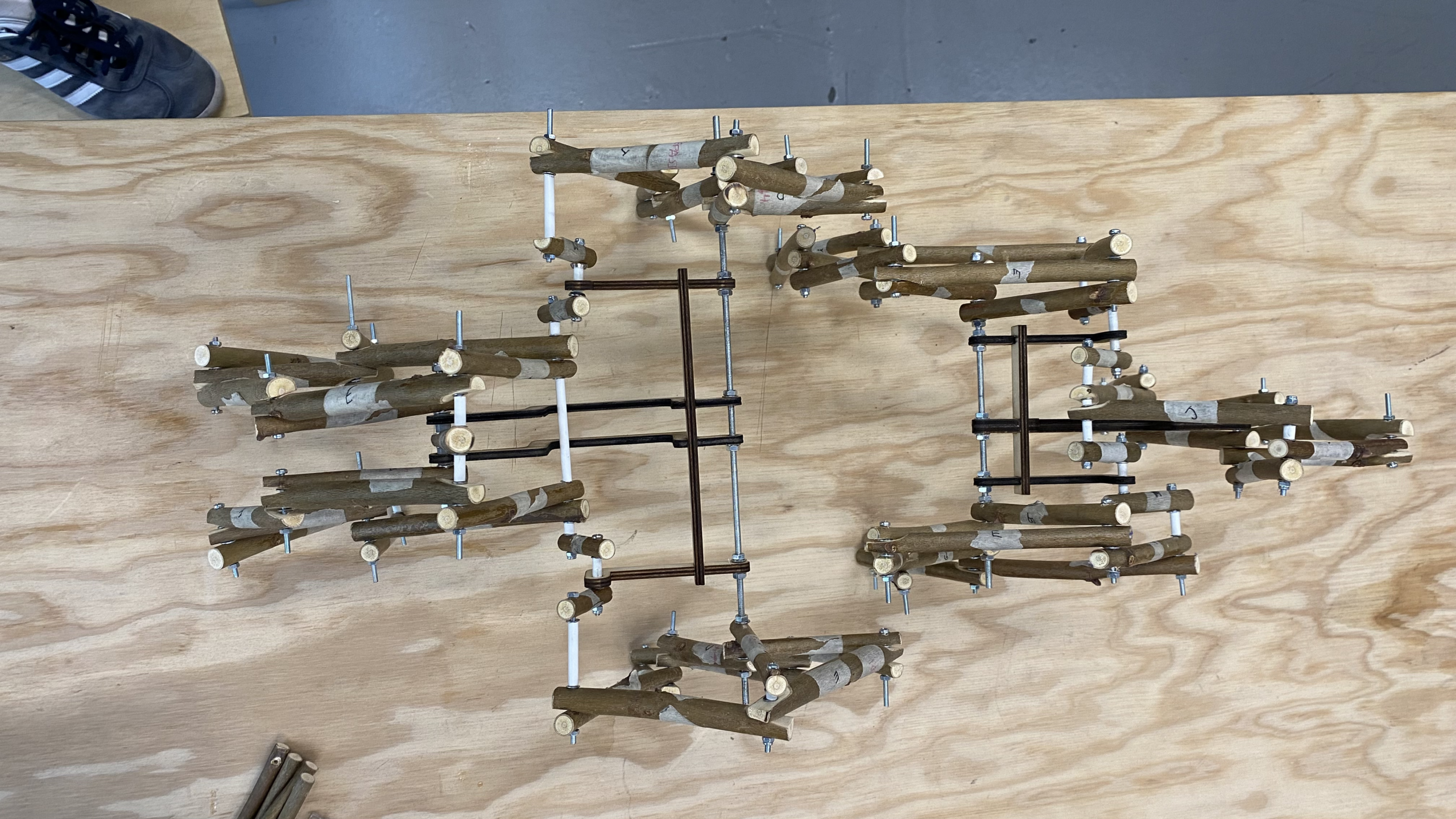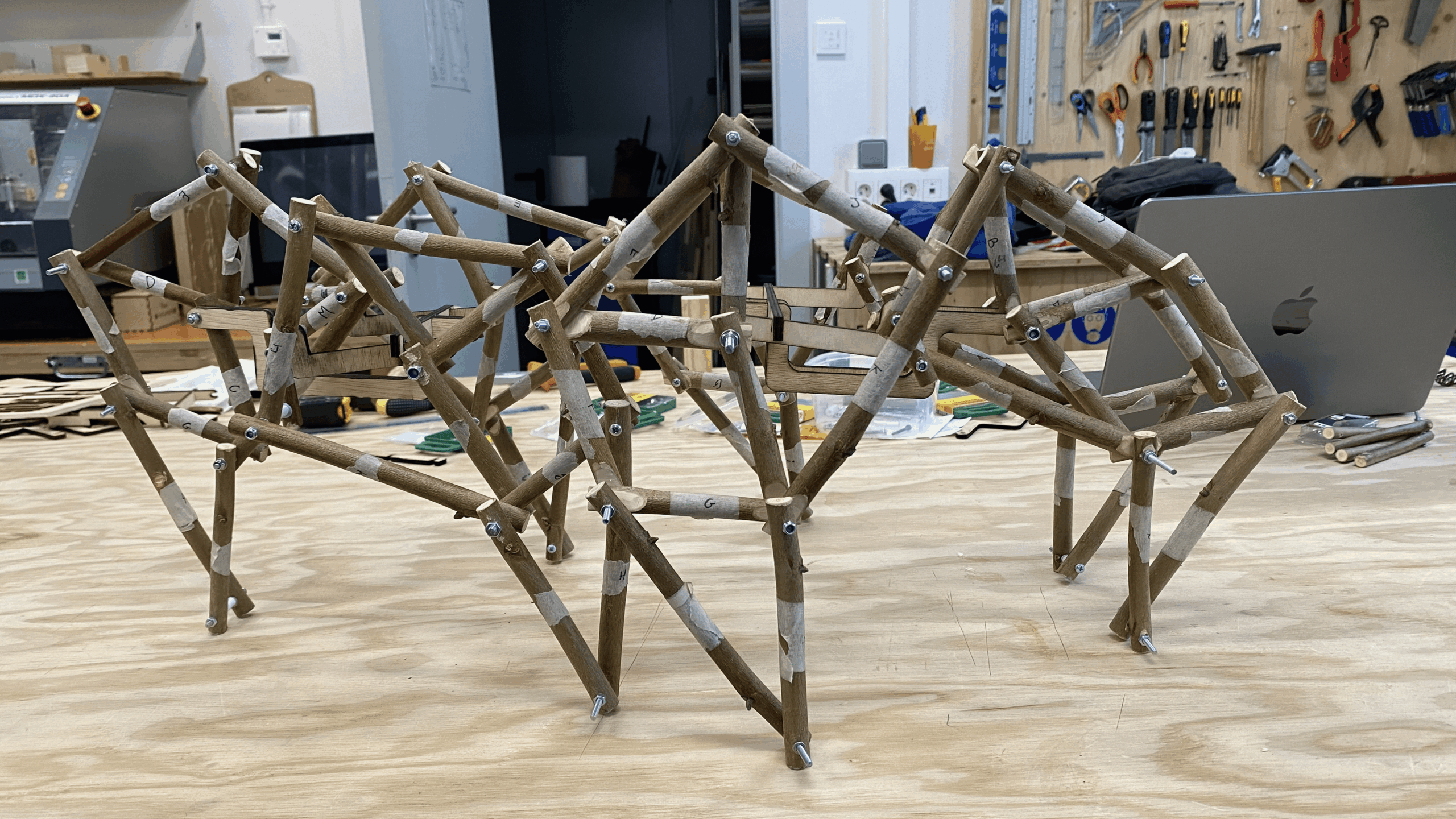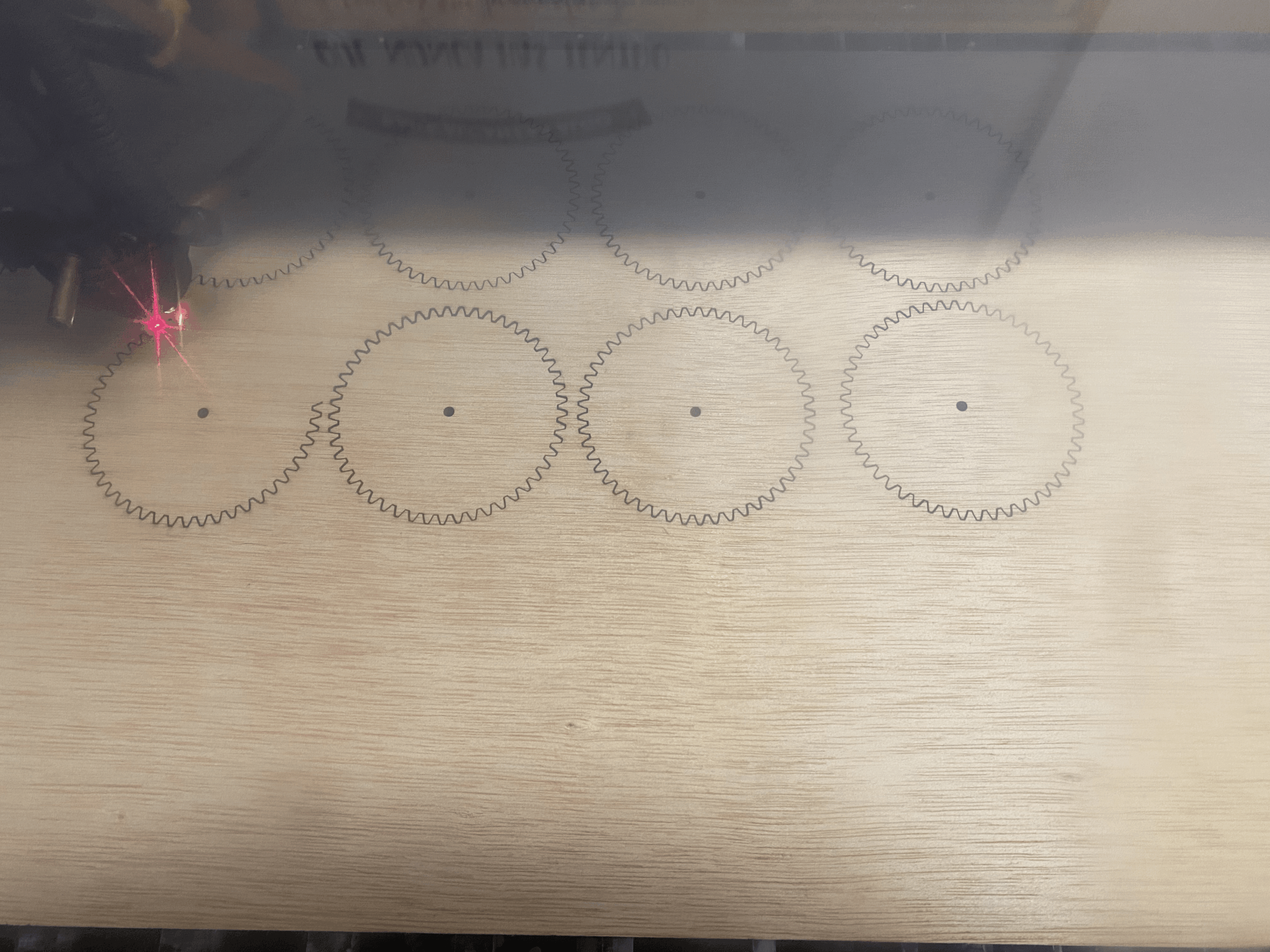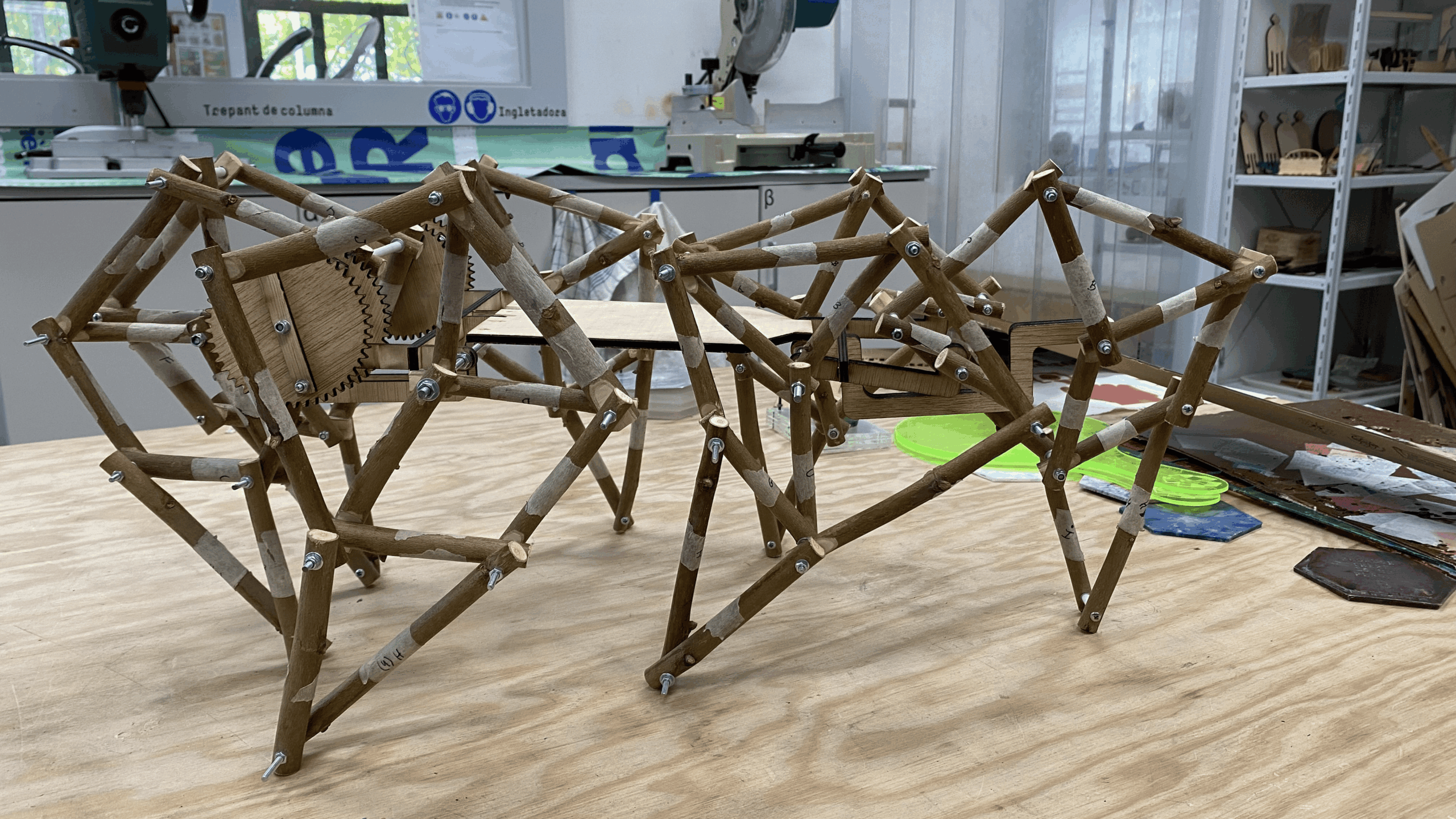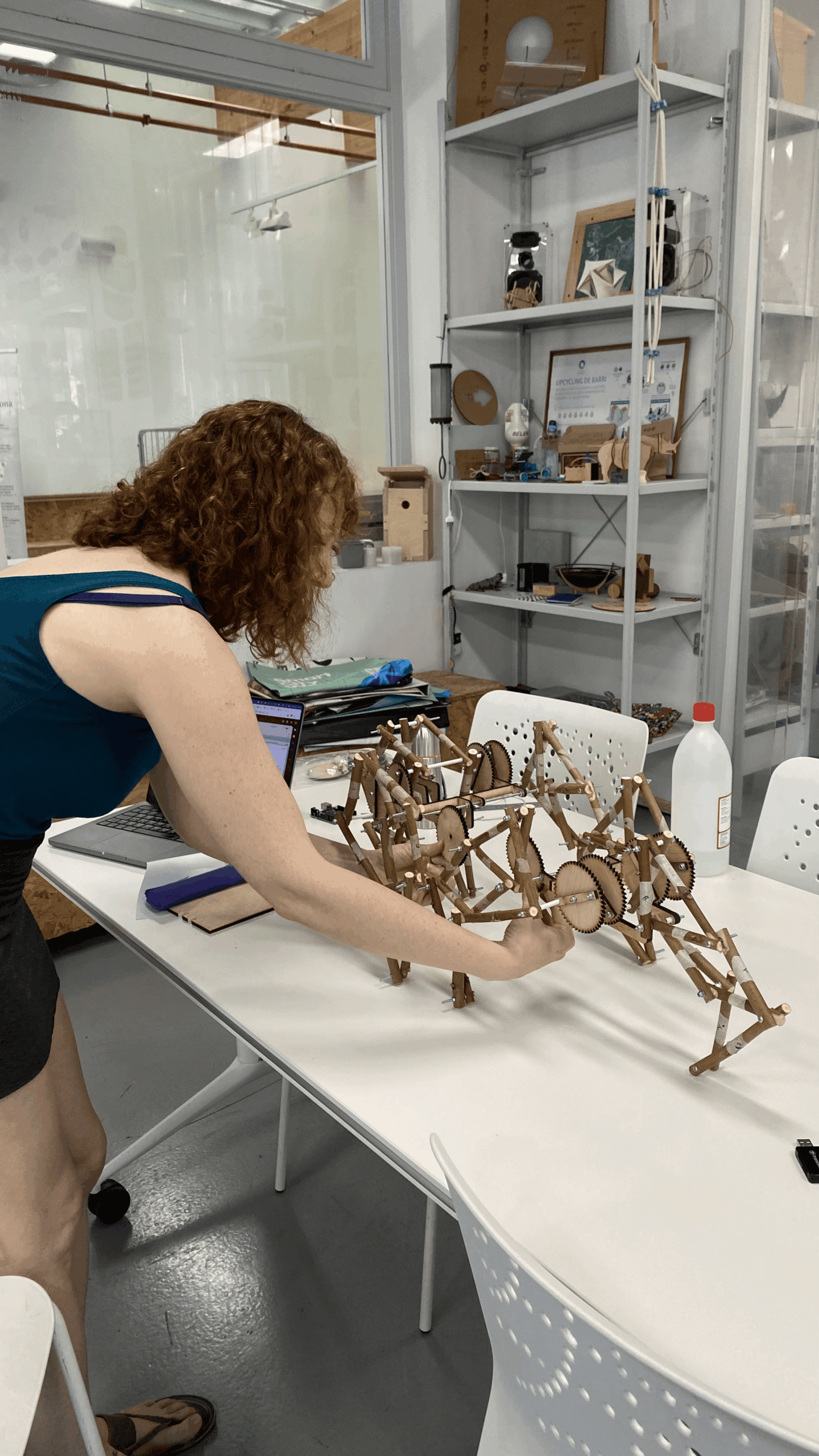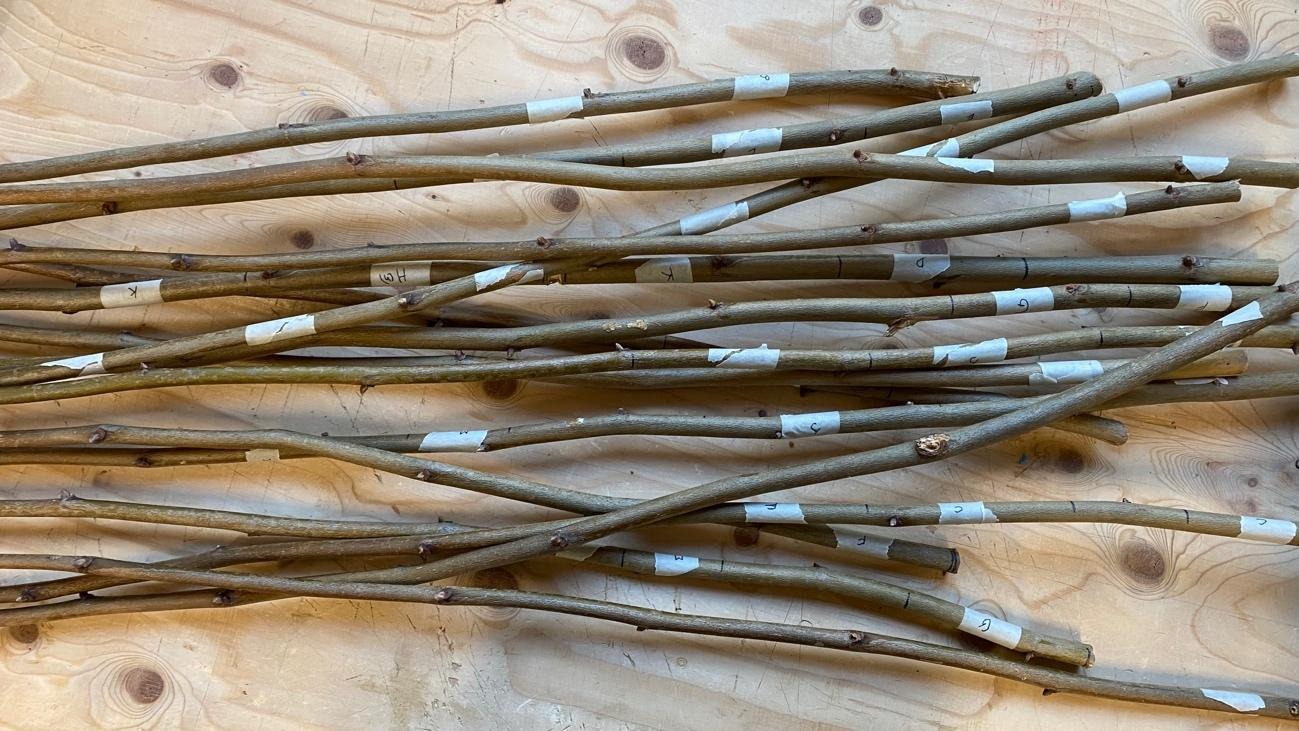

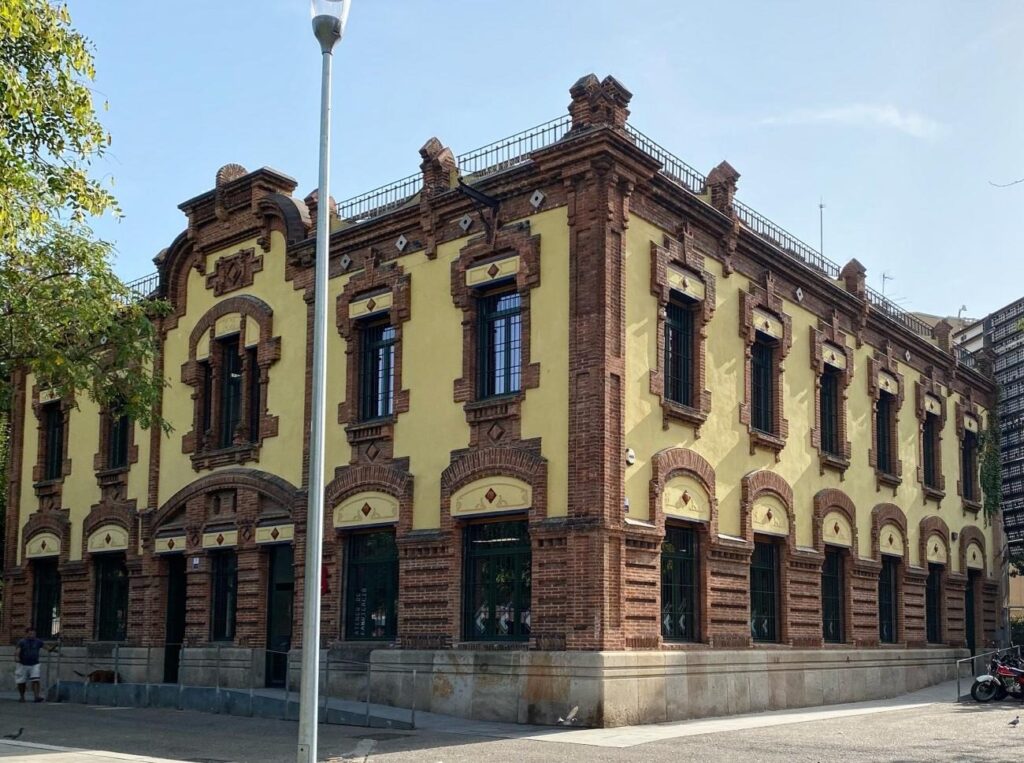
During the initial iterations of the project, I decided that my practice should be rooted in the Catalan context, be open-source, and low-fi. Given my limited budget, I also aimed to utilise the resources available within the municipality. Additionally, I had no formal training in engineering or robotics at the time, and the Ateneus de Fabricació (AdF) network was a place where I could receive assistance and training in digital manufacturing, enabling me to bring my ideas to life. After visiting several AdFs, I started working at the AdF Fàbrica del Sol in October 2022, with the assistance of the two on-site technologists: Marc Bassó, an industrial engineer, and Marianna Carenini, an industrial designer. I had already been working on the conceptualisation and design of the puppet over the previous months, using plastic straws, and it was now time to build the puppet with the final materials so I could attempt to mechanise Keré and test its interaction with me.
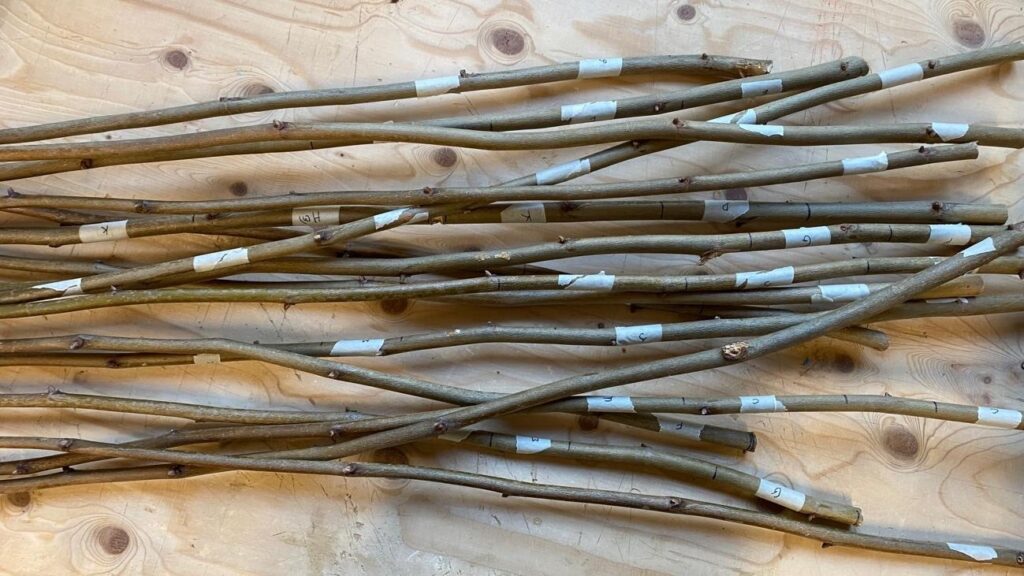
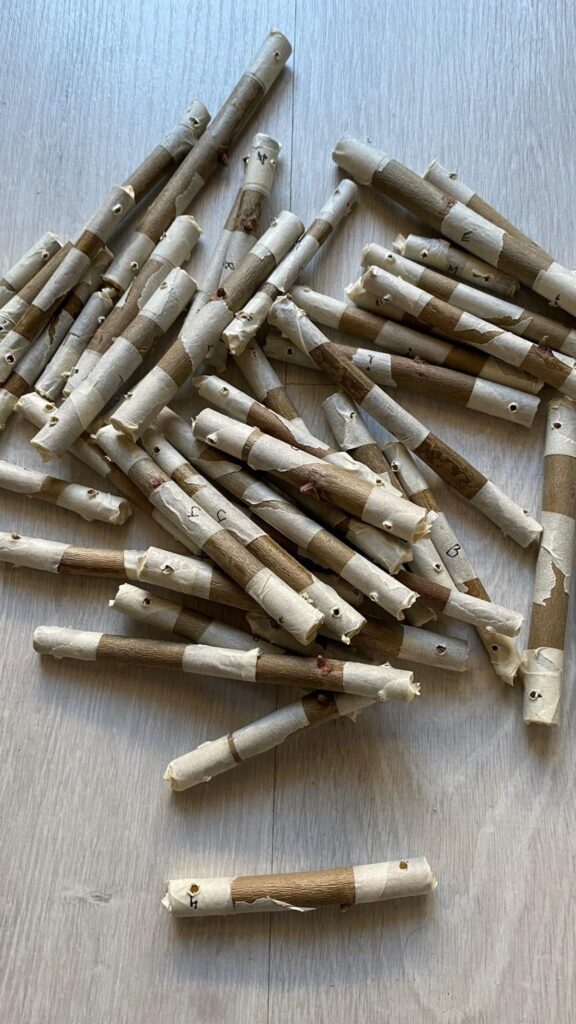
From October 2022 to February 2023, I worked on building the seven legs of Keré and setting up a provisional structure that could hold together the four legs of the front axis and another for the three legs of the rear axis. At the beginning of my collaboration with the AdF, I asked the technologists whether it would be possible to 3D print parts with biomaterials to build the joints and axis structures for Keré’s legs. Since the wood I used was soft, I was advised to use regular screws and threaded bars to improve resistance to movement wear. As explained in the previous section, the arrangement of legs in Keré’s body was inspired by the image of an andiron from the Iberian Laietani village of Puig Castellà in Santa Coloma de Gramenet, my hometown. I modified Jansen’s original design by separating each set of two legs. Strandbeest's design is based on pairs of legs facing opposite directions, mounted on the same horizontal axle. In my design, I maintained the distance between the cranks on each pair of legs but increased that distance. This modification increased complexity and marked the start of many subsequent problems. I had to find a new way to configure the transmission system without replicating Jansen’s design.
Before beginning to design the transmission system, Marc Bassó, one of the technologists from the AdF helping me with the project, suggested digitally simulating the movement of several sets of legs to get a clearer sense of which direction to take. He proposed using PAM(1) – Mechanism Analysis Programme, an open-source software developed by the Department of Mechanical Engineering at the Universitat Politècnica de Catalunya (Clos Costa & Puig Ortiz). Marc and I were unable to simulate the movement with the programme, so I contacted Dr. Joan Puig Ortiz, one of the creators of PAM and a lecturer at the Department of Mechanical Engineering at the UPC, to seek advice. During my visit, Joan Puig shared information on how Jansen’s leg mechanism worked, validated my leg design, and simulated a couple of possibilities for the leg transmission: one using cranks and gears, and another with gears united by a transmission bar, like the wheel mechanism of trains.
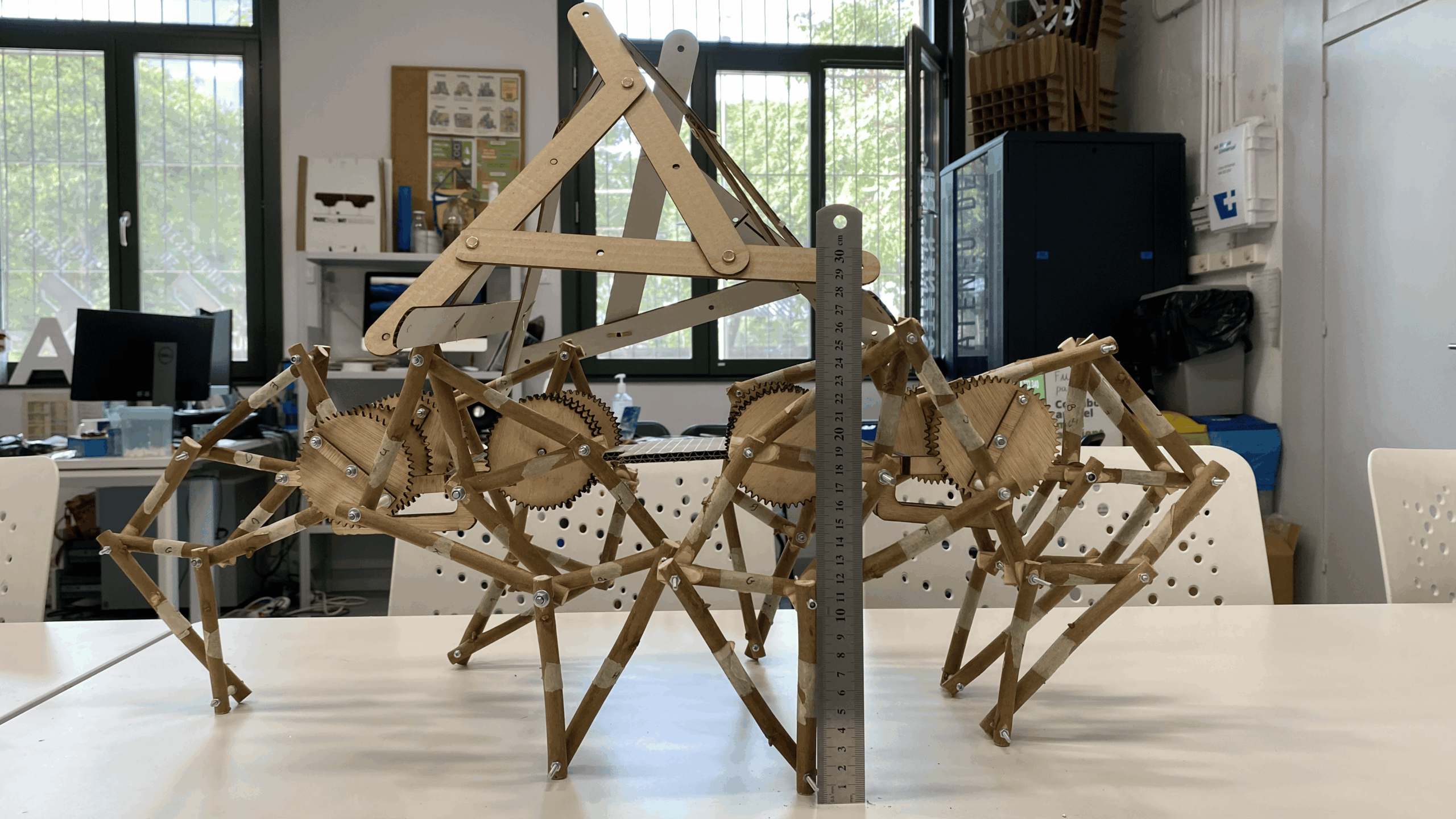
By the end of February 2023, a new phase of the fabrication process began, during which I focused on the structure and transmission system. This has been the longest and most challenging phase, lasting over two years, and has caused me multiple delays due to problems with the system and available materials, as well as scheduling issues and AdF closures. Additionally, during this phase, I started learning a new set of skills, utilising digital design and manufacturing tools to customise the various components of the structure and transmission system. Following the principle of using open-source software, the AdF’s technologists introduced me to Onshape (PTC), a cloud-based CAD software that offers free plans for students and showed me how to operate the laser cutting machine. I used Onshape to design most of the customised components while working at the AdF Fàbrica del Sol. However, when I started working at the AdF Les Corts, I had to switch to Rhino 3D, which they provided, because it was the software they used to communicate with their laser cutting machine.
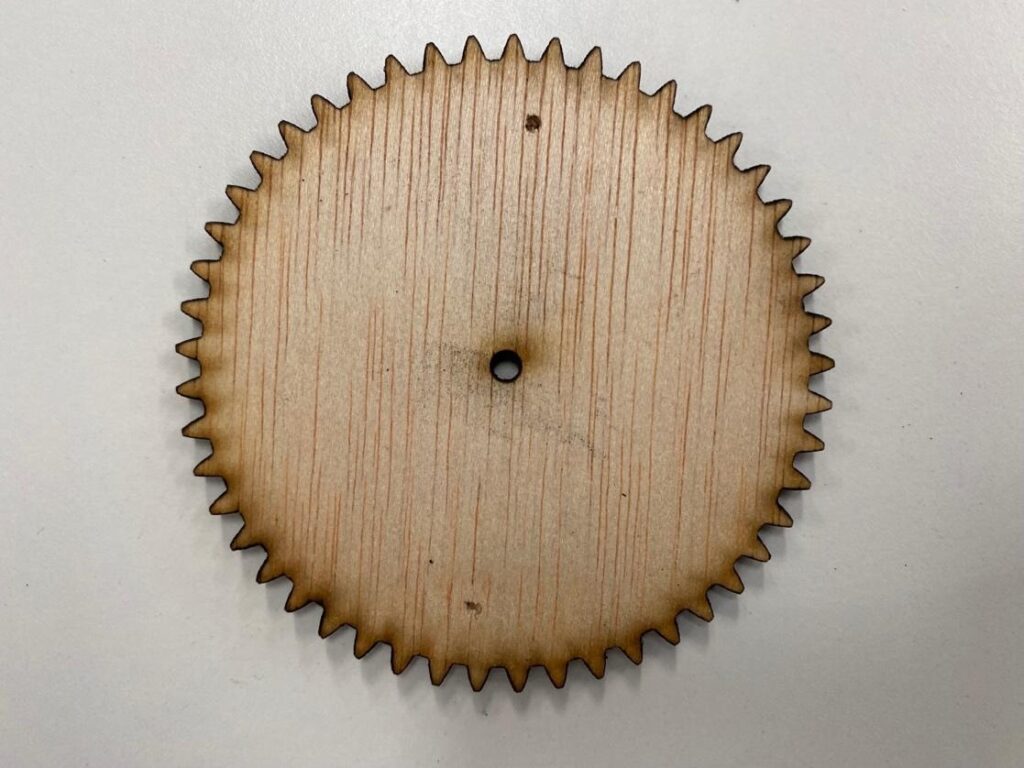
There were four distinct stages in this phase. In the first stage, I designed a structure to hold the displaced sets of legs together and to create the fixed structural points on the front and rear axles. Once the structure seemed stable enough, I began working on a transmission system that utilised gears and toothed belts to distribute power. To design the gears, I used open-source gear generators available online. For all the structural and transmission components, I used plywood sheets measuring 3-5mm thick, sometimes glueing them together to achieve the desired width. This material is easy to laser-cut and affordable enough to work with on a trial-and-error basis. It also allowed me to manipulate the various components with hand tools as needed and easily recycle spare pieces.
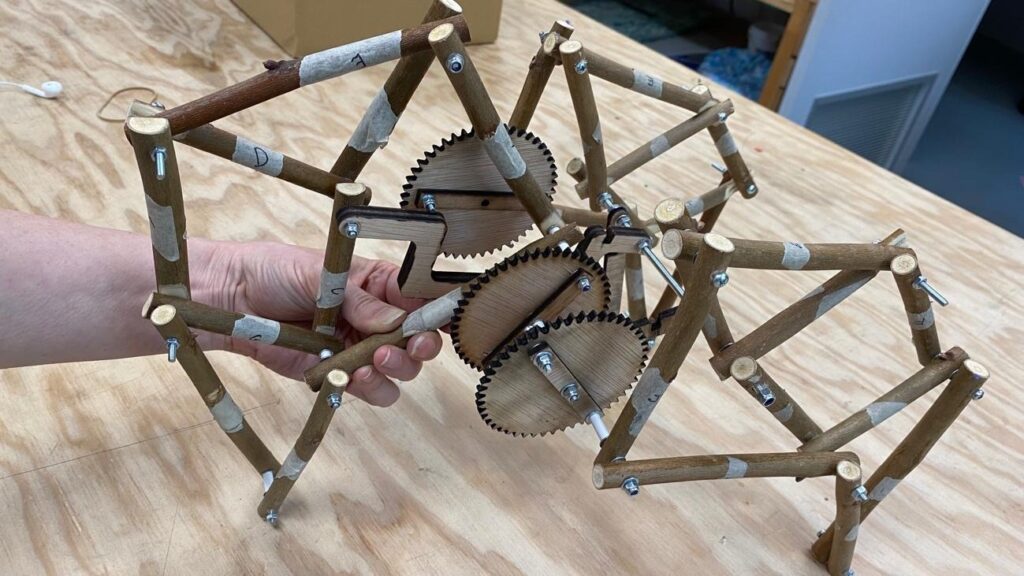
I worked on this design from February to July 2023, during which I researched the possible engines I could use, their placement, and what type of support structure could hold all the electronics while keeping the front and rear sets of legs together. One of the advantages of working at the AdFs is the opportunity to network and share knowledge among users. During this period, José Carlos Florez, a digital media artist, was also working in the AdF Fàbrica del Sol and his compensation for using the facility for his projects was to help me with the initial design of the electronics I could use with Keré. I had already done some coding practice on Arduino, and José Carlos introduced me to other possible boards I could use, depending on what I wanted Keré to be able to do, such as sensors, cameras, Bluetooth communication, and batteries, among others. He taught me how to connect several engines and devices, and we also did some basic coding to get the engines to move back and forth.
By the end of July 2023, Keré seemed to be almost ready to walk after the summer break. The basic support structure and transmission system were prepared. Only the toothed belts that transfer power from the engines to the legs were missing. I could not find the type of belts I needed in local stores, so I contacted a couple of companies that could manufacture custom toothed belts according to the specifications I provided. Although I told them that my design could adapt to products they had in stock, as long as the measurements were close to the ones I provided. After waiting for two months, I finally received an answer stating that they would not be able to supply my order and refused to offer any alternatives.
(1) (Original name in Catalan) Programa d’anàlisis de mecanismes. Universitat Politècnica de Catalunya
(2) I tried different gear generators, but the one I finally used to design the gears was from the webpage of Evolvent Design. https://evolventdesign.com/pages/spur-gear-generator?srsltid=AfmBOopTwDP88pkLBryox18mvB9NjnA8kVwu8P-rj-DZkUt0ORM4qz-d