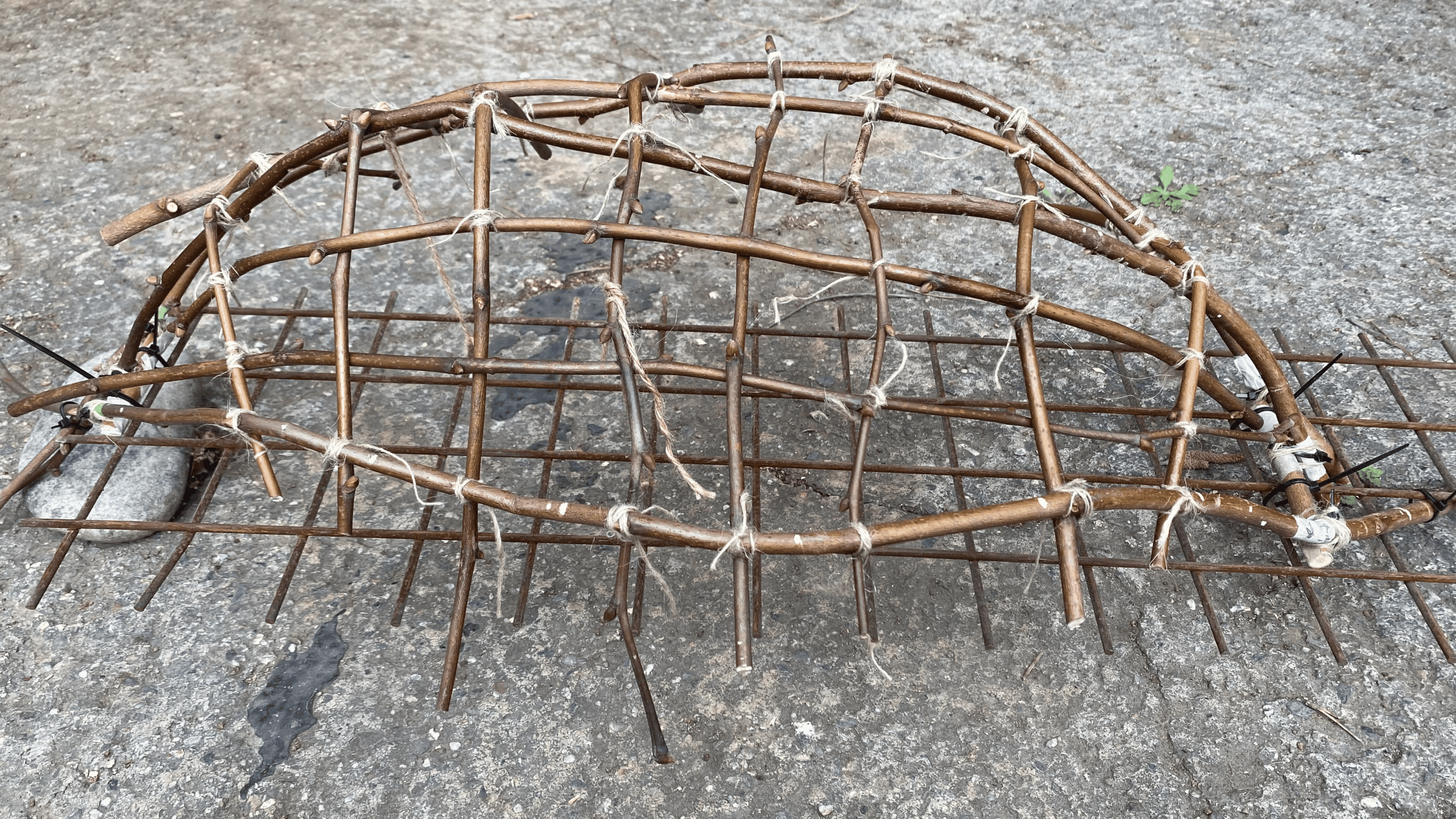

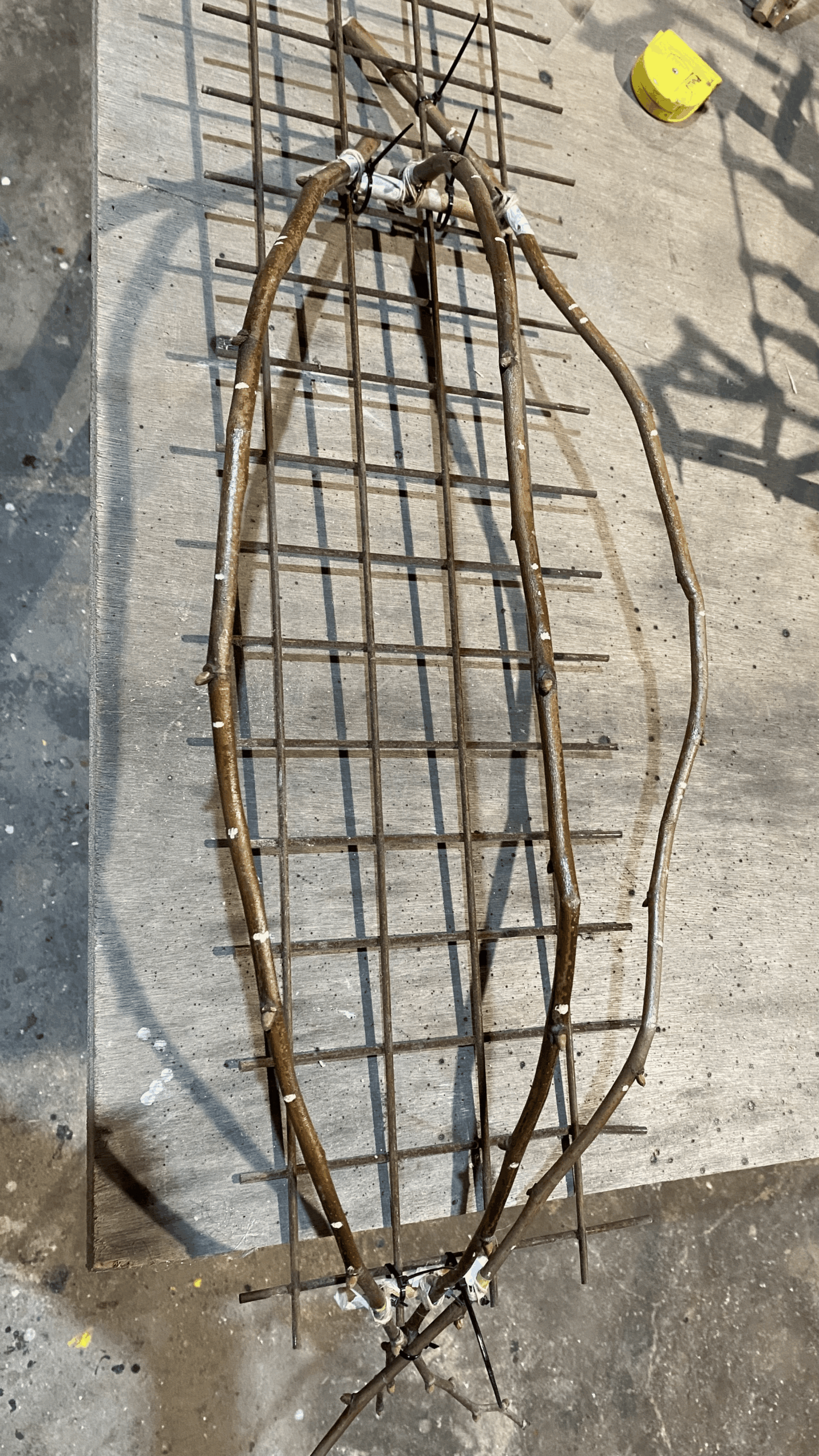
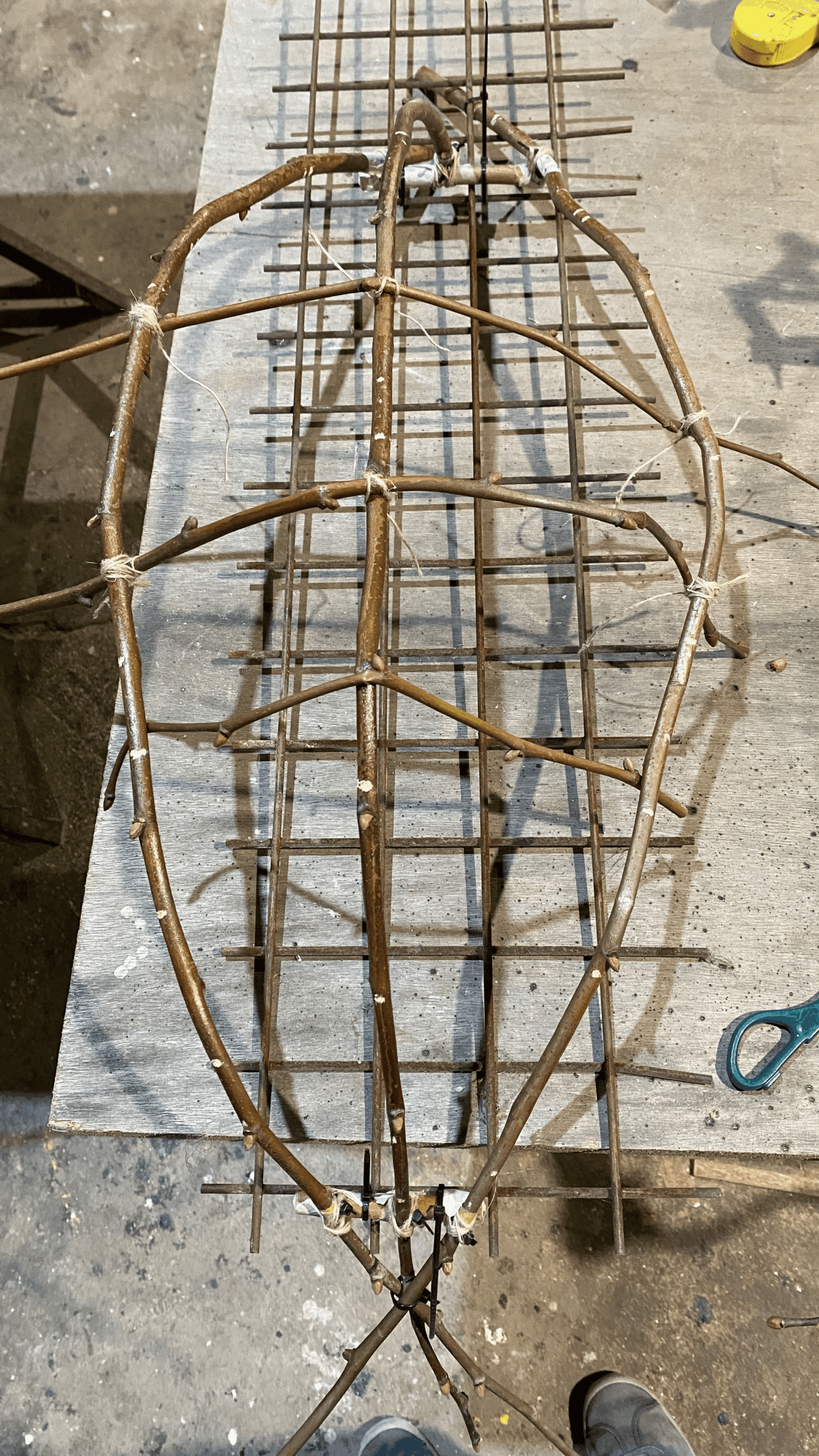
The third stage of the mechanisation process took place at the AdF Les Corts. Although it was where the final phases of the puppet's construction progressed most, I constantly felt I was losing control of the project because my bookings were often cancelled. I was not able to work there independently, which delayed testing the interaction between Keré and me again. I began my collaboration with the AdF Les Corts in February 2025 alongside Aritz Rodríguez, a 3D designer trained in robotics and coding, who would assist me as the technologist. Before that, and for a couple of months, I had been working on the dome that covers Keré’s body and where plants are going to grow at the workshop of L’Avalot Teatre.
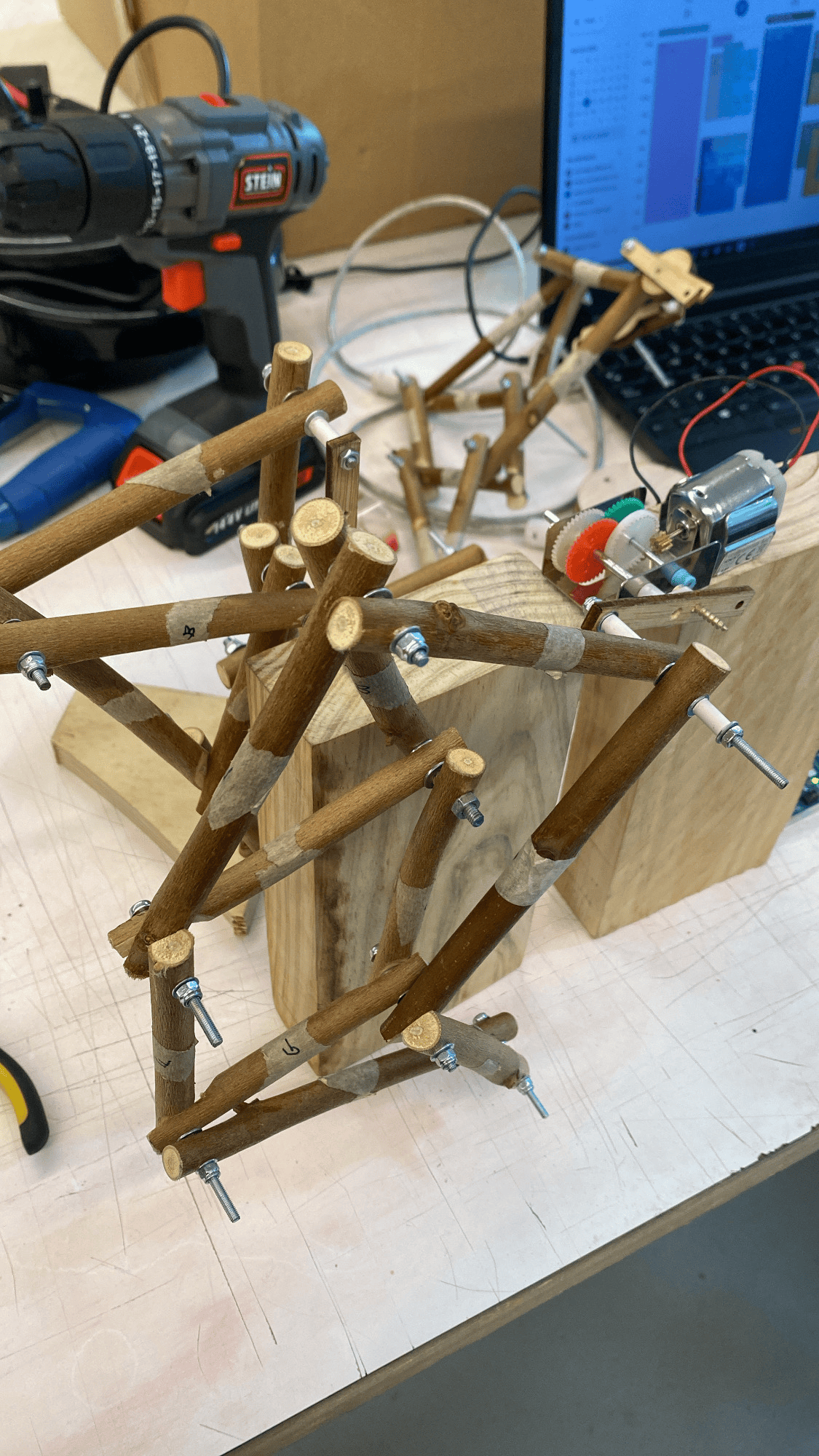
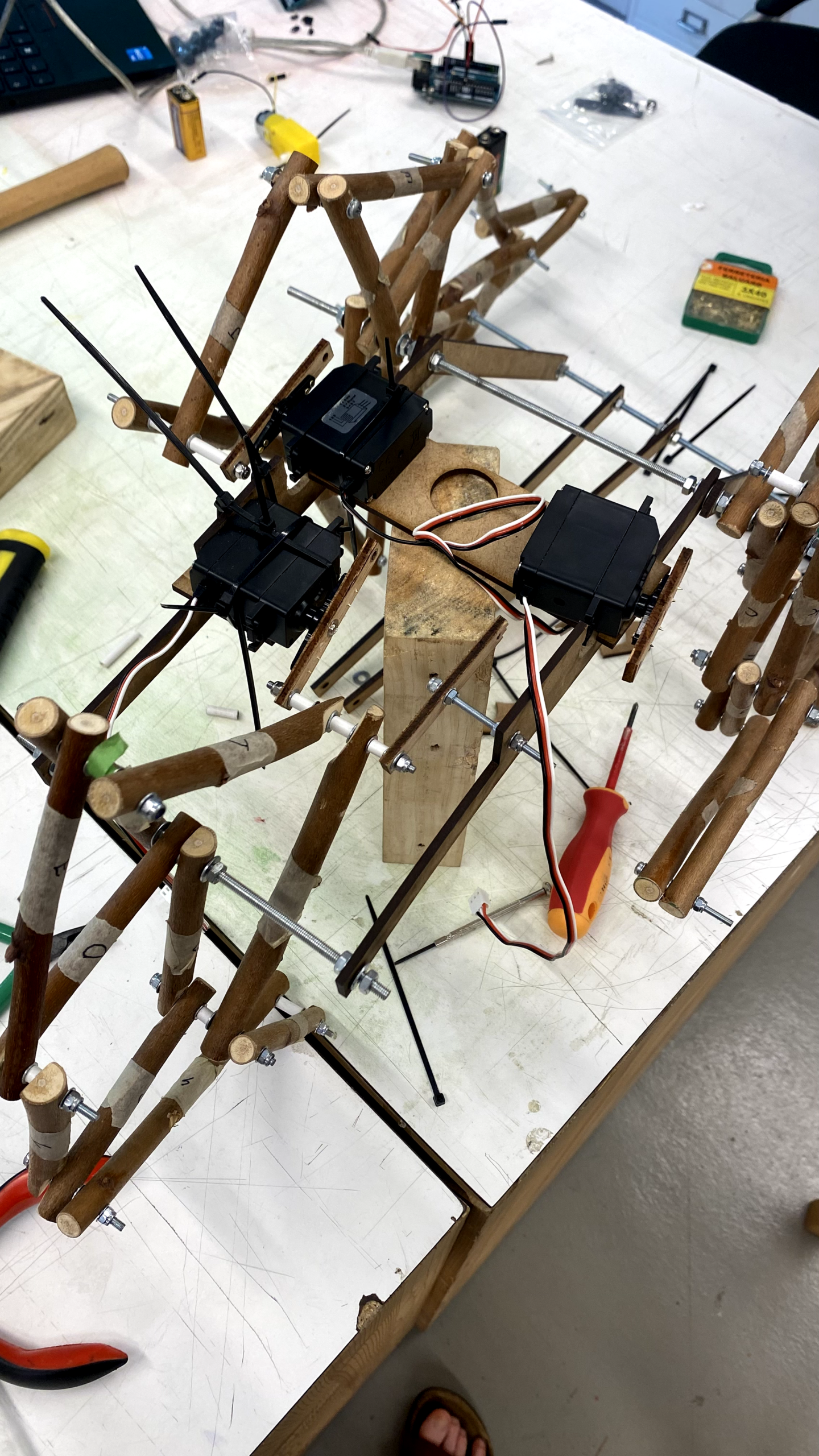
With Aritz, although the pulley system seemed to be working, we discussed that it added significant weight to the puppet and that I would lose some of the engine’s power through the system before it reached the legs. Inevitably, instead of starting with mechanising the puppet, we spent almost three months trying to figure out a new transmission system using cranks so that Keré’s legs would receive the power directly from the engines. Another item Aritz was concerned about was the puppet's internal structure. To avoid collisions between the different parts, I was working with a very light structure that did not provide enough stability to the moving parts, so that Keré could stand straight and not scatter. At the same time, we tested which engines would be most suitable and have enough torque to move the entire structure. We started testing a Servomotor and a DC motor on just one leg, using a crank to transmit power.
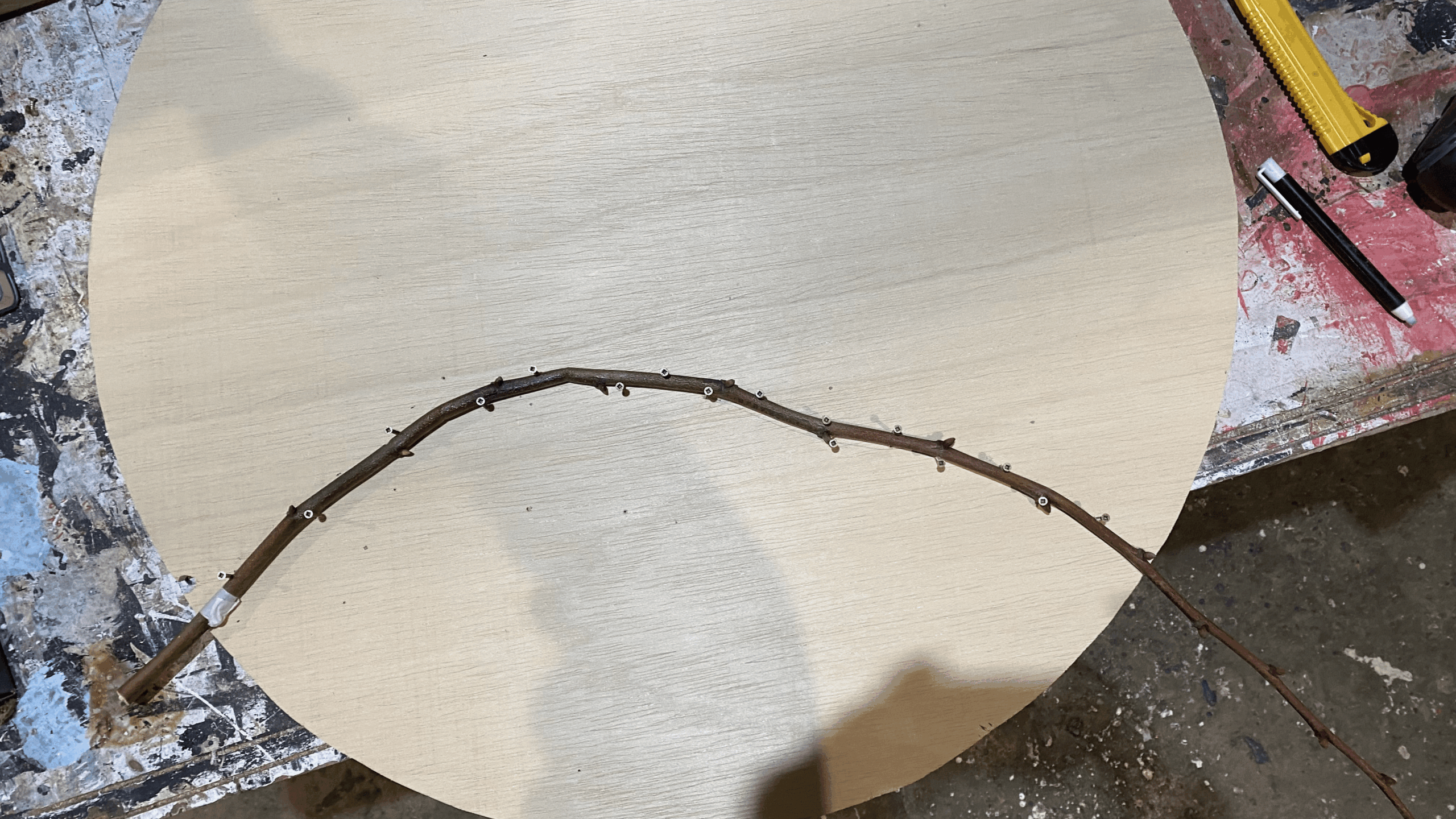
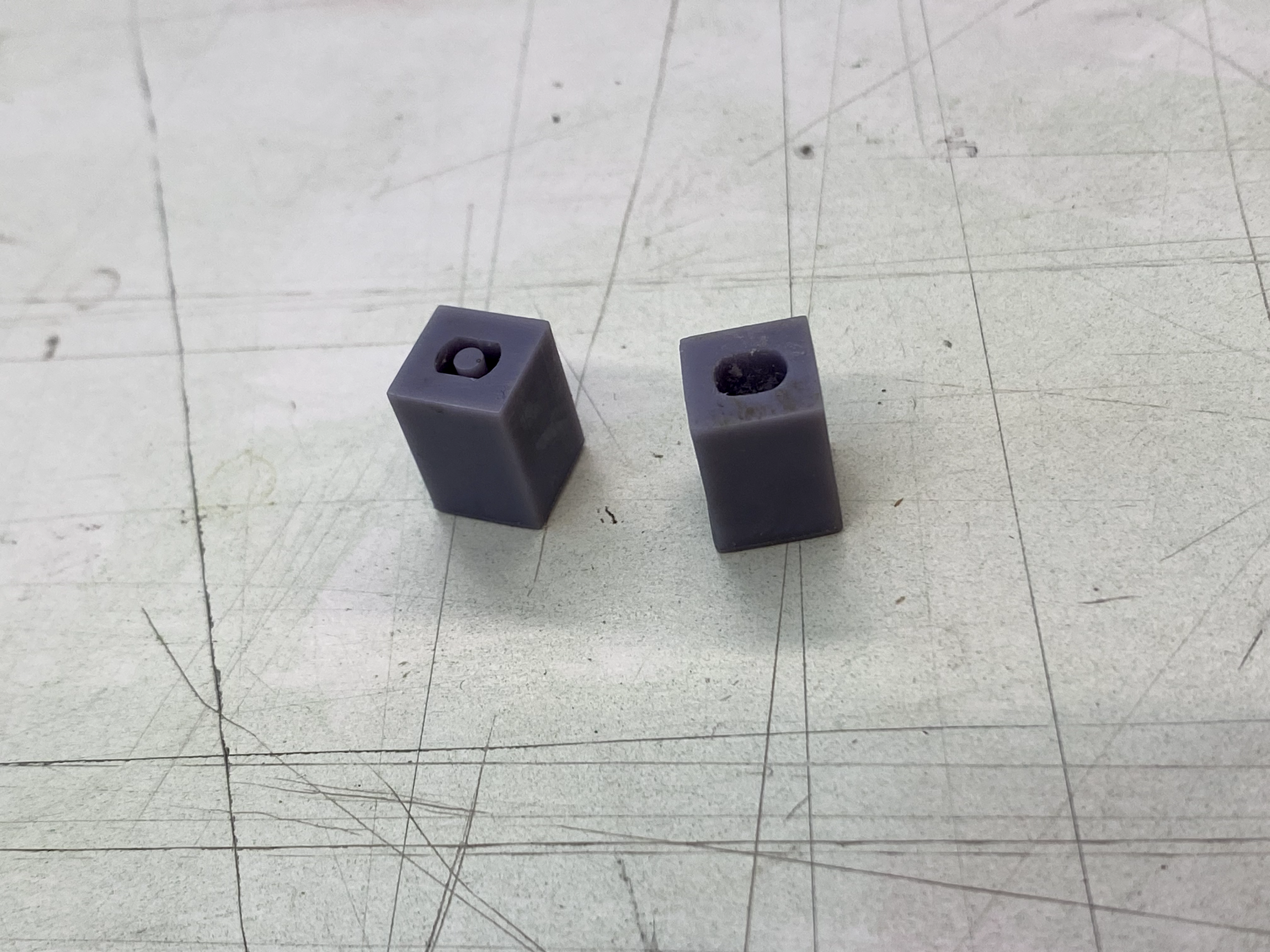
After testing, we believed the DC motor would have enough power, so we designed a scrap structure to test it using a pair of legs. Since it seemed to be working, we took detailed measurements of the DC motors(1) and their intended locations and made slight modifications to the previous leg setting to fit the structure we were designing. We designed another trial support structure and laser-cut it using 3mm spare plywood sheets. To make a firm fit between the engine and the crank, we created custom fittings and cranks. We tried to 3D print the fittings with PLA filament, but the material expanded, rendering the components unusable. Ultimately, we were able to print the fittings using resin and 3D print the cranks using a wood filament(2), a material that contains 20% recycled olive pits, as opposed to only PLA, which gives a wooden appearance and texture once printed, while also being compostable and biodegradable. This aligns with the overall concept of the project.
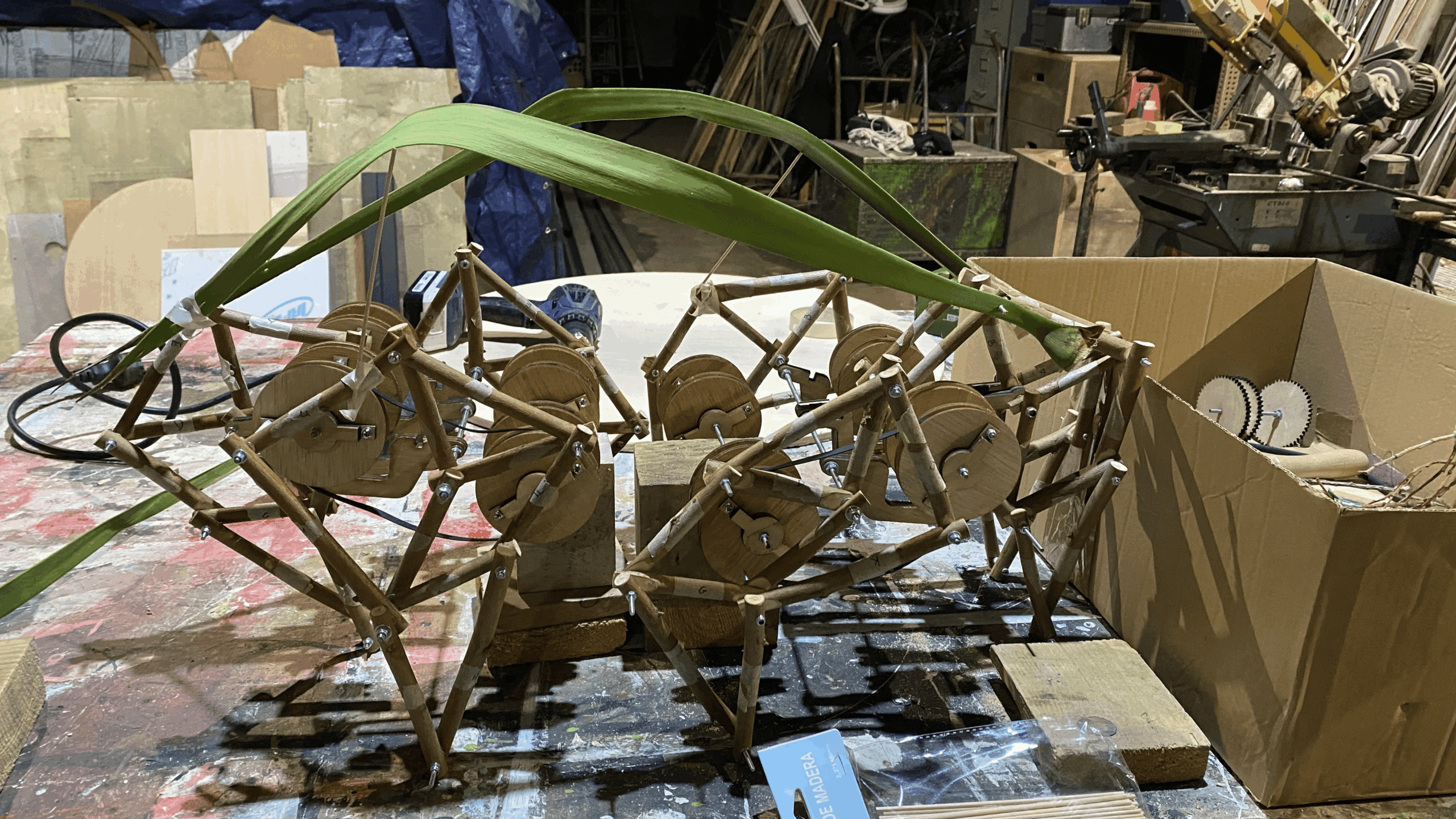
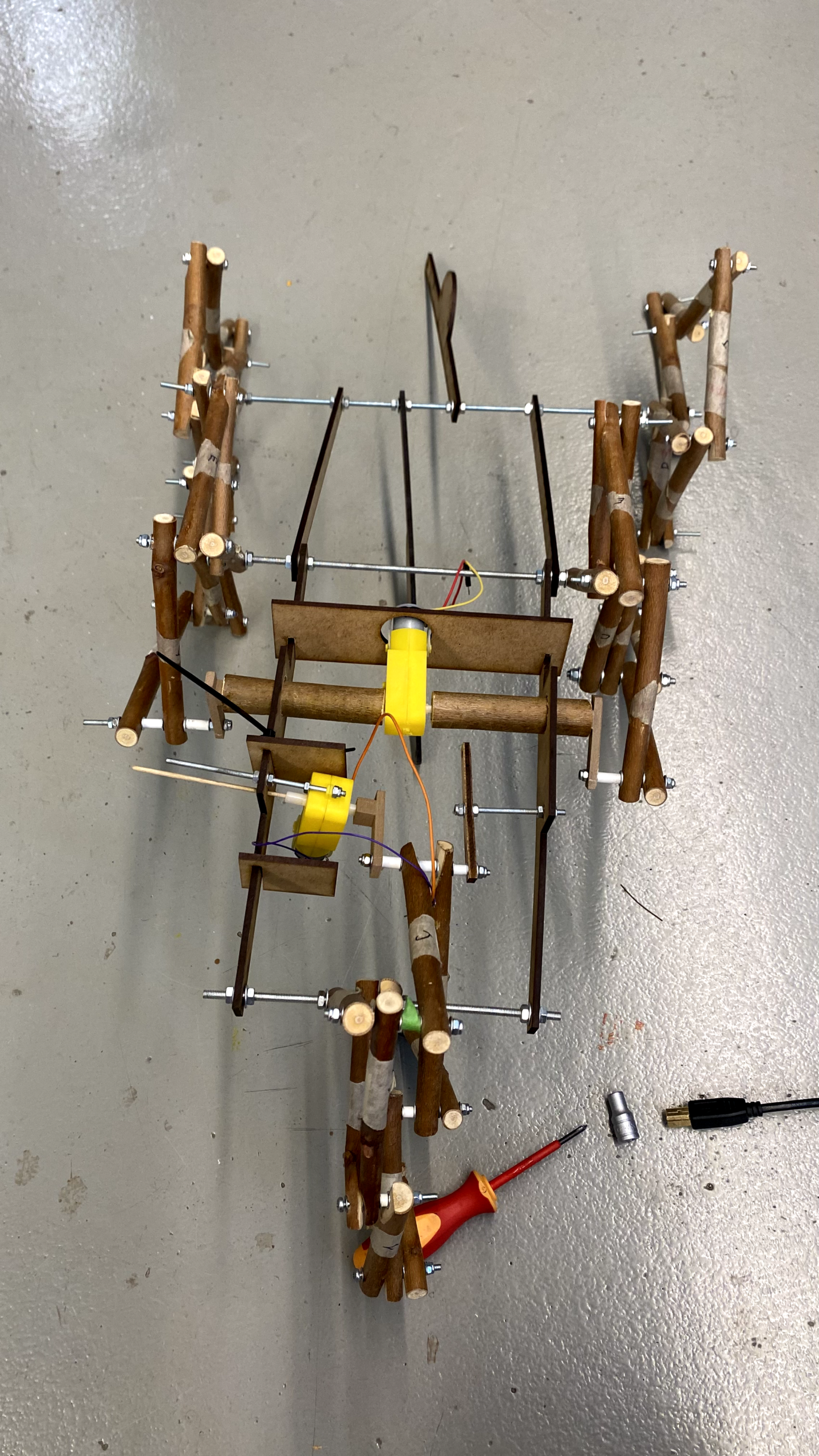
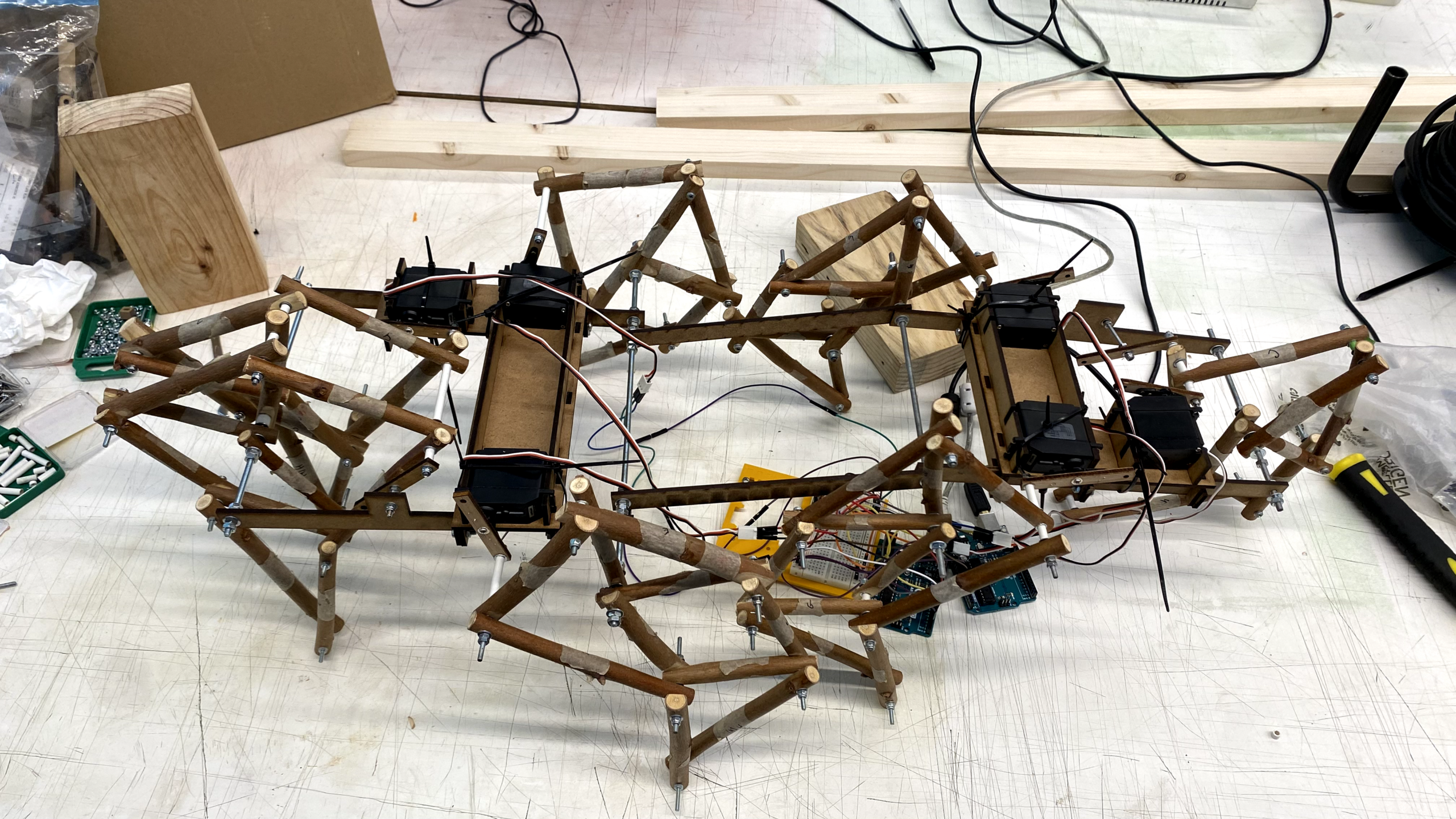
These iterations continued until early June 2025, when we assembled the entire structure with only a couple of DC motors on one axis of Keré. We used an Arduino Uno board directly connected to the computer to conduct the first walking tests. The DC motors had enough torque to move the legs in the air, but not once the whole structure was placed on the ground.
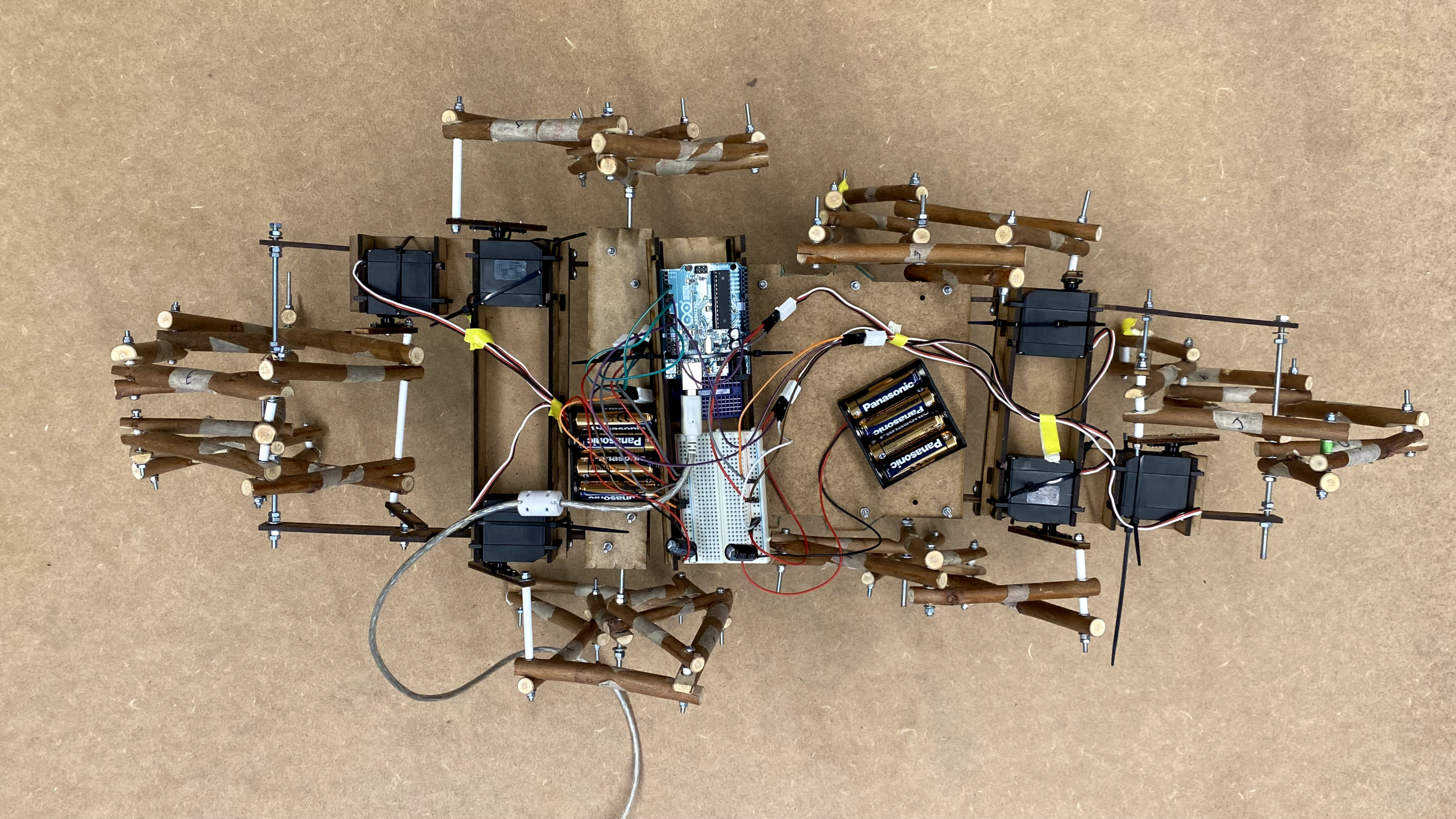
Following this testing, we replaced the DC motors with six 360º continuous rotation servomotors and refined the design of the final support structure. To avoid wasting filament and time, we first laser-cut the structure from spare plywood sheets to test the fit.

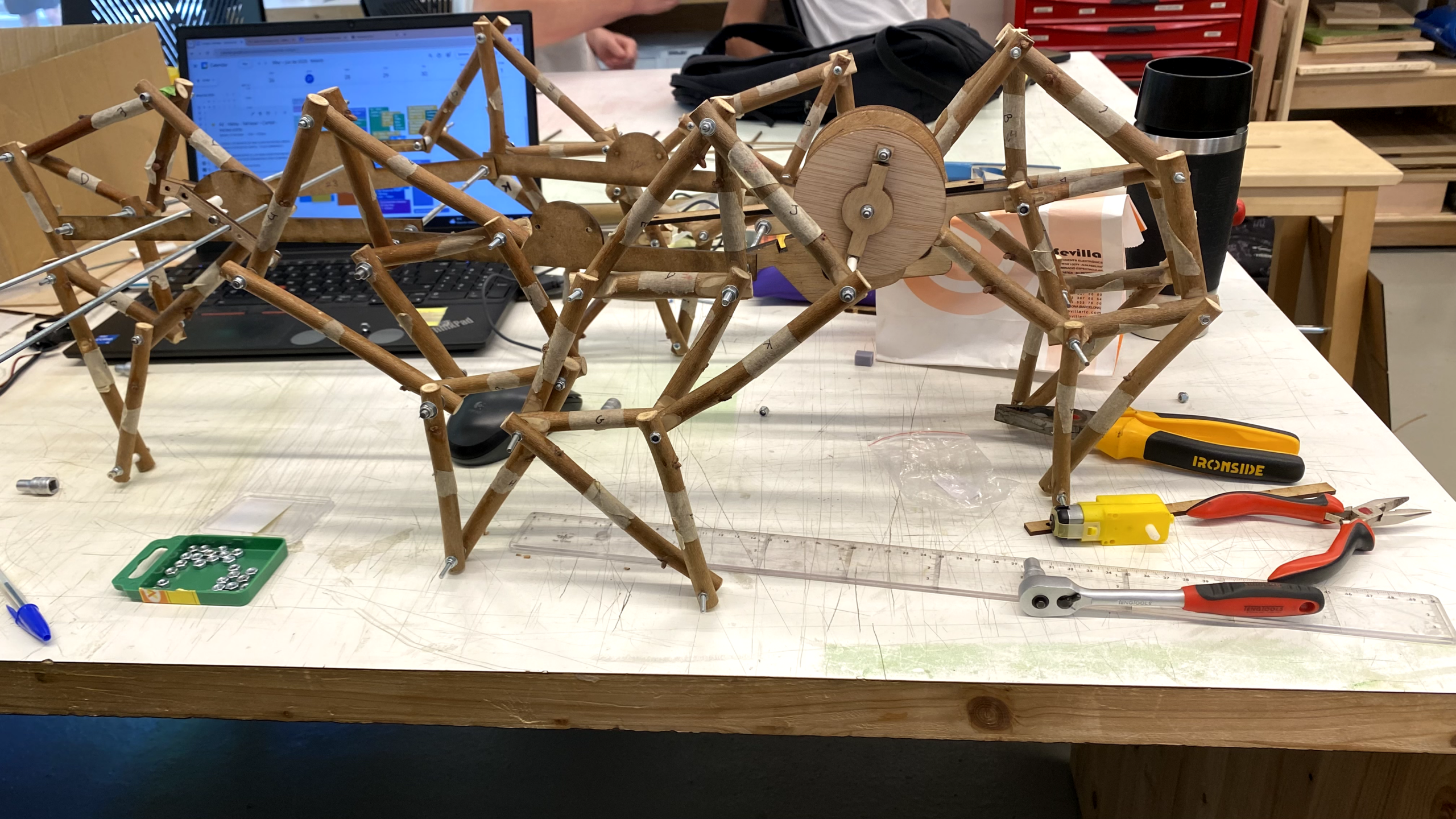
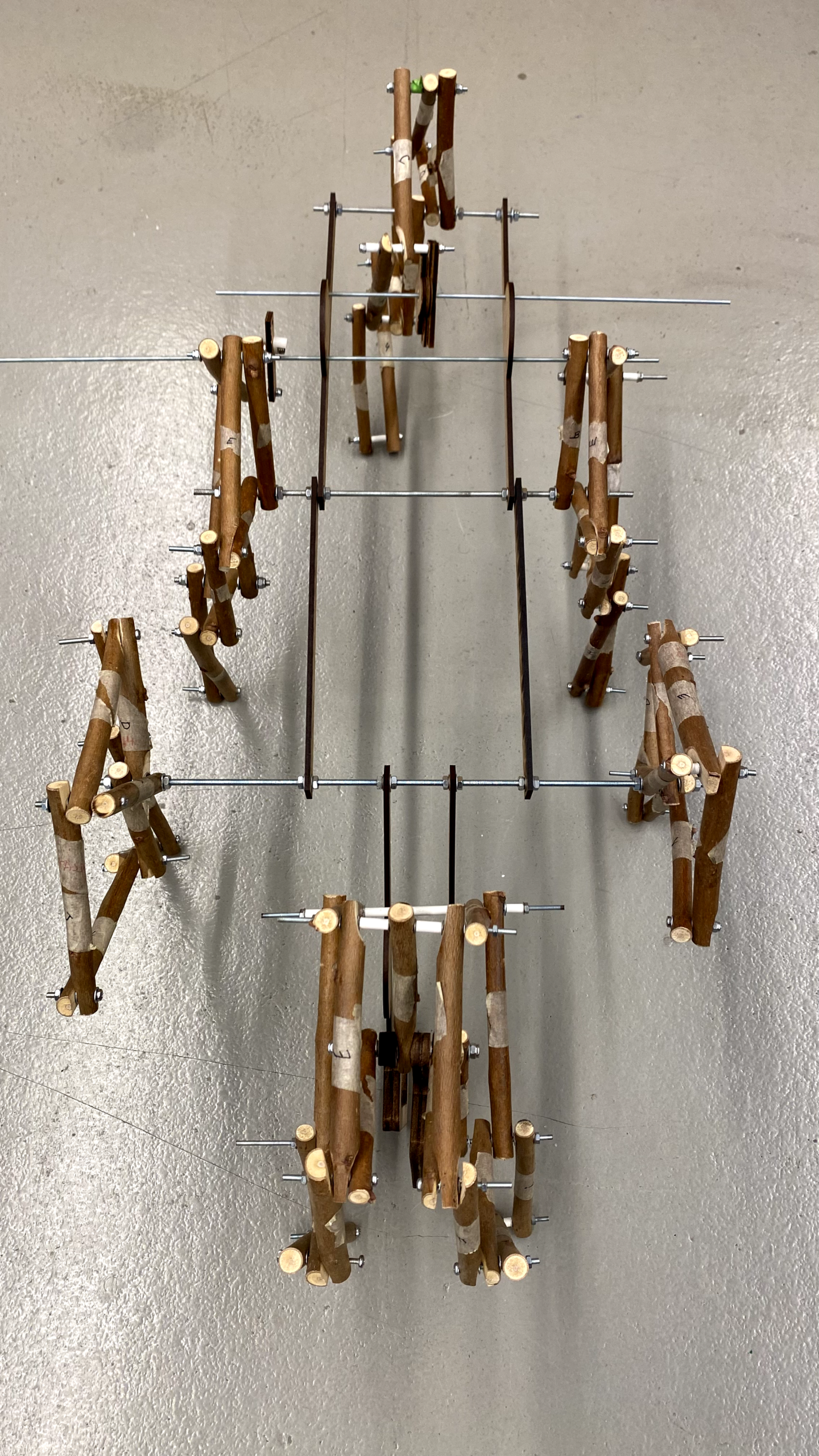
After fitting all the pieces together, we went back to test the walking mechanism. The transmission system seemed to work well, but we then started having issues with the power supply. Keré need to be autonomous and move without being plugged into a socket. At first, we powered the system through the Arduino board, drawing power from the computer, knowing it would not be sufficient. While we figured out how many volts and amps were needed, we used a charger with different power options. It worked much better, but it was not the solution because it needed to be plugged into a socket. We finally used two battery holders and 8 AA batteries to power the system and give autonomy to Keré. In the videos, you can still see Keré connected to the computer via a cable, but it was only to easily modify the Arduino board's code and to start and stop the system.
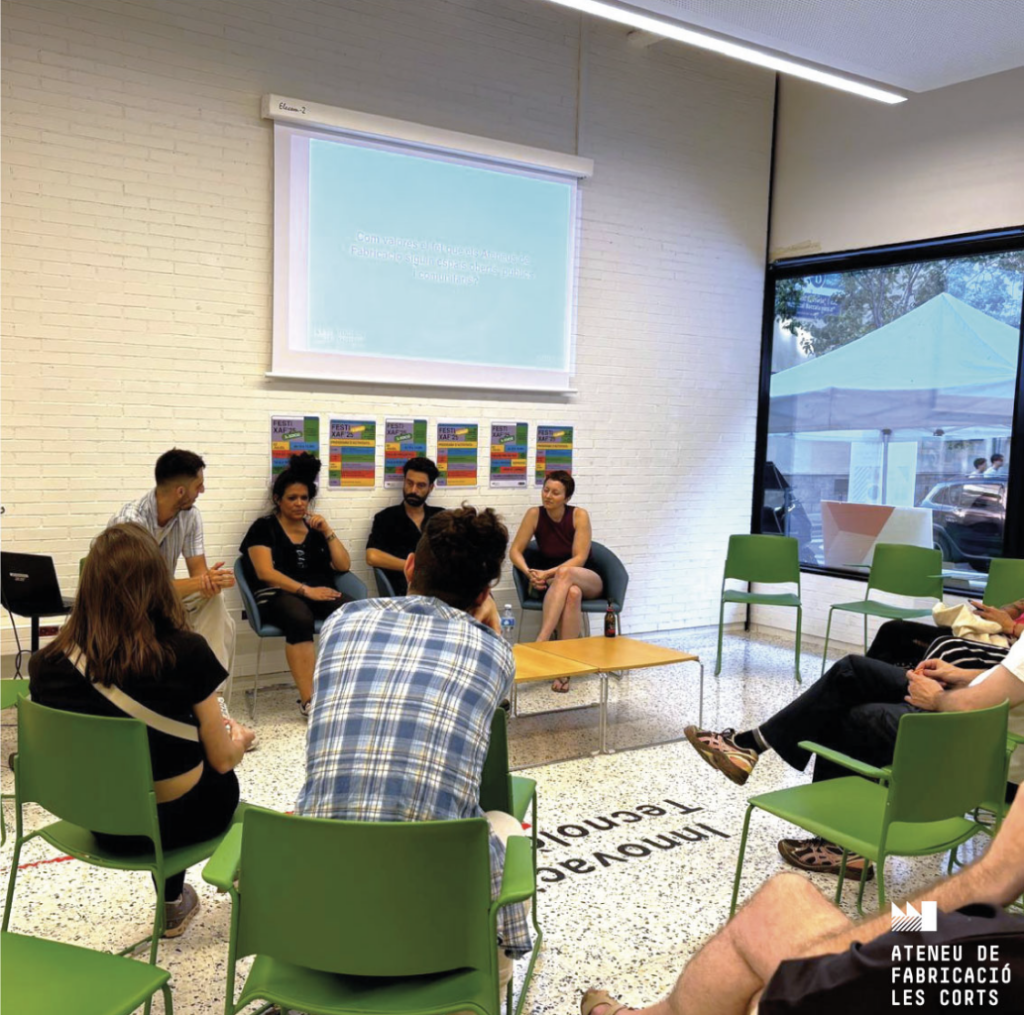
As compensation for using the AdF Les Corts I took part in the roundtable of “Artistic Practices and Digital Manufacturing” in the FestiXaf 2025 with two more artists collaborating with the network, which took place on July 2nd at the same AdF. Some of the topics debated centred on how to enhance interactions between the artistic community and the AdF network. Artistic practices require more time allocated than what is currently available at the AdFs, and there may be a need in the future to incorporate a separate program exclusively for artists, which will most likely be institutionalised through calls for artistic residencies. I consider this a good option, but it will probably leave many projects that currently have access to the facilities behind. Another key topic debated was the need for the artistic practices in the AdFs to share their processes in a common archive accessible to future users of the facility. This is the other part of my compensation with the AdF Les Corts, which was agreed upon from the beginning. The structural designs, techniques, and overall concept of the project will be available under a Creative Commons license, allowing others to consult and to facilitate further iterations.




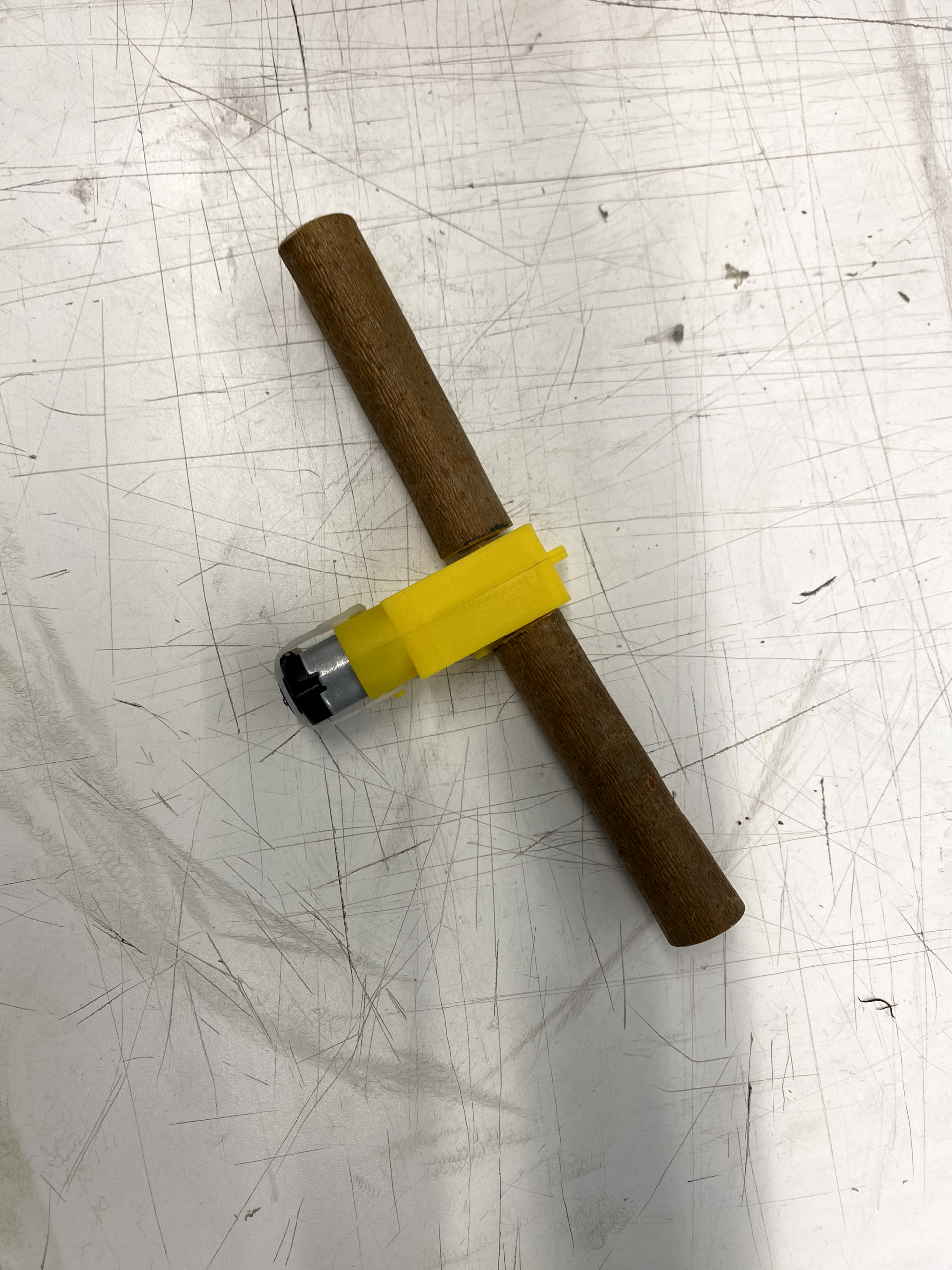

(1) I used Dual Shaft Gearbox DC motors (2-6V)
(2)I used Smartfil Eco Olive filament with a 2.85mm diameter. This filament is made with 20% olive pit waste from the province of Jaen (Spain) and 80% biodegradable PLA
https://www.smartmaterials3d.com/en/pla-olive#/2-size-m_750g/25-colour-natural/27-shoes_size-285_mm